
Insurance-Approved Door Locks in London: What Your Policy Actually Requires (2026 Guide)
Last updated: September 2026
Most people only read the security section of their home insurance policy after a break-in. By then it’s too late to find out the front door had the wrong lock. As locksmiths based at 28 Pitt Street in Kensington, we deal with break-ins across London every week.
We often find locks that don’t match what the homeowner’s insurance provider expected: the wrong lock type on the back door, a basic cylinder that snaps easily, or no key-operated window locks downstairs.
Call us now if you need a fast locksmith in Kensington and nearby areas. We are prepared to help you with all types of insurance-approved door locks, and we can also offer advice or solutions.
This guide explains what insurers usually mean by insurance-approved door locks, how to check the locks on your doors and windows, and what to change if they fall short.
Quick answer: Most policies require the front door and every other final exit door to have either a 5 lever mortice deadlock conforming to BS3621, or a multi-point locking system with at least three locking points. French doors usually need key-operated security bolts. Sliding patio doors need a key-operated lock plus an anti-lift device. Accessible windows need key-operated window locks. Wording varies between policies, so always check the lock requirements in your own home insurance documents.
| Door or window | What most insurers ask for | How to check |
|---|---|---|
| Wooden front door | 5 lever mortice deadlock to BS3621 | Kitemark and “BS3621” on the faceplate |
| uPVC or composite front door | Multi-point locking system with three locking points and a 3-star cylinder | Kitemark with stars on the cylinder face |
| Sliding patio doors | Locks that need a key, plus an anti-lift device | Try lifting the door from inside; it shouldn’t move |
| French doors | Key-operated security bolts top and bottom, plus a deadlock | Bolts should need a key to open |
| Windows you can reach from outside | Lockable handles or sash stops that need a key | Handle or stop should have a keyhole |
What insurance-approved door locks actually mean
Insurers don’t approve individual products. Instead, your home insurance policy sets a minimum standard. Any lock that meets that standard counts as one of the insurance-approved locks your insurance provider is asking for. Typical policy wording reads something like: “All final exit doors must be secured by a five lever mortice deadlock to BS3621.” If your lock meets that standard, it is approved for that policy, whatever the brand. The same lock might not satisfy a different insurer, which is why reading your own home insurance wording matters.
That’s why the details matter. Two door locks can look almost identical, and only one may carry the British Standard Kitemark. The difference is inside the lock: tested resistance to drilling, picking and forcing. Many policies also say that the locks referred to in the policy must actually be locked whenever the home is empty. Having secure locks fitted isn’t enough if you don’t use them.
Types of locks insurers ask for
These are the types of locks and standards that appear most often in UK home insurance policies:
BS3621
The main British Standard for thief-resistant door locks that need a key to open from both sides. A BS3621 5 lever mortice deadlock is the classic insurance-approved lock for wooden front doors.
BS8621
The same security level, but the lock opens with a thumbturn from inside so you can get out quickly without a key. It is common in flats.
BS10621
A dual-mode lock. It works like a thumbturn lock while you’re home and can be switched to key-only when you go out.
TS007
The Kitemark scheme for euro cylinders and handles on uPVC and composite front doors. A 3-star cylinder is the level most insurers look for.
SS312 Diamond
Sold Secure’s top rating for cylinders, tested against lock snapping and other attack methods.
PAS 24
A standard for the complete doorset (door, door frame and hardware tested together). It is common on new external doors.
Knowing these types of locks, and which lock type each standard applies to, makes it much easier to read your policy and to talk to your insurance provider or locksmith. Other locks you’ll find on London homes, such as basic rim locks, 3 lever mortice locks and standard euro cylinders, don’t meet any of these standards.
Door lock type: how to check what’s fitted
Before you buy anything, work out which door lock type you already have on each door. It takes two minutes to check the door locks you have now, and it tells you whether each lock conforms to your policy or needs replacing.
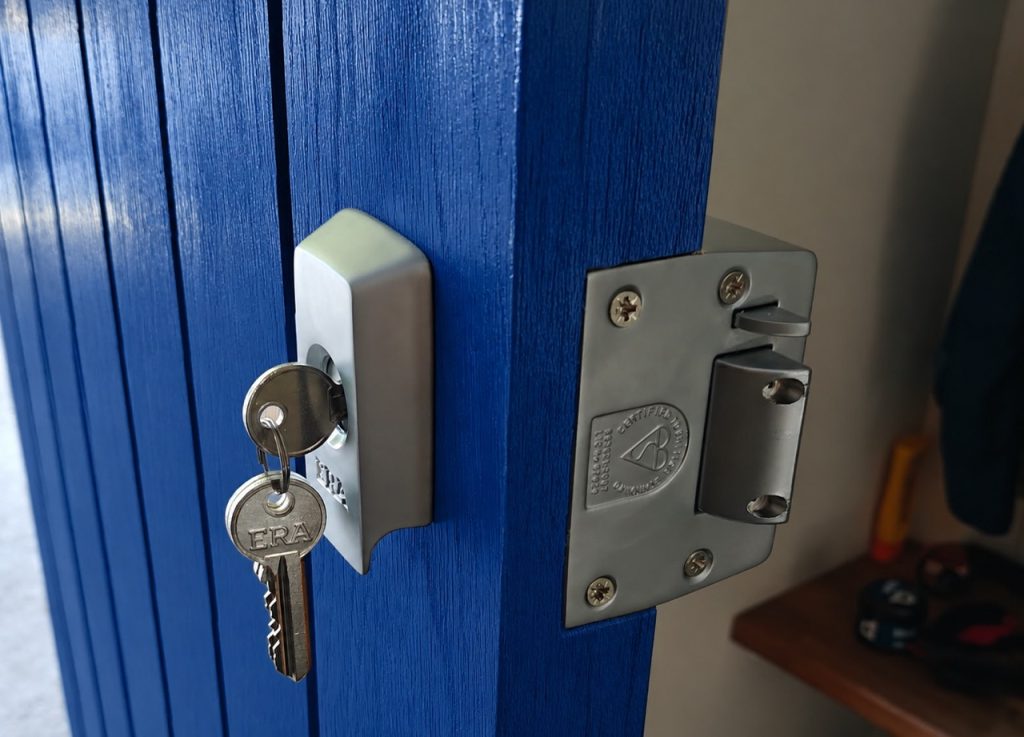
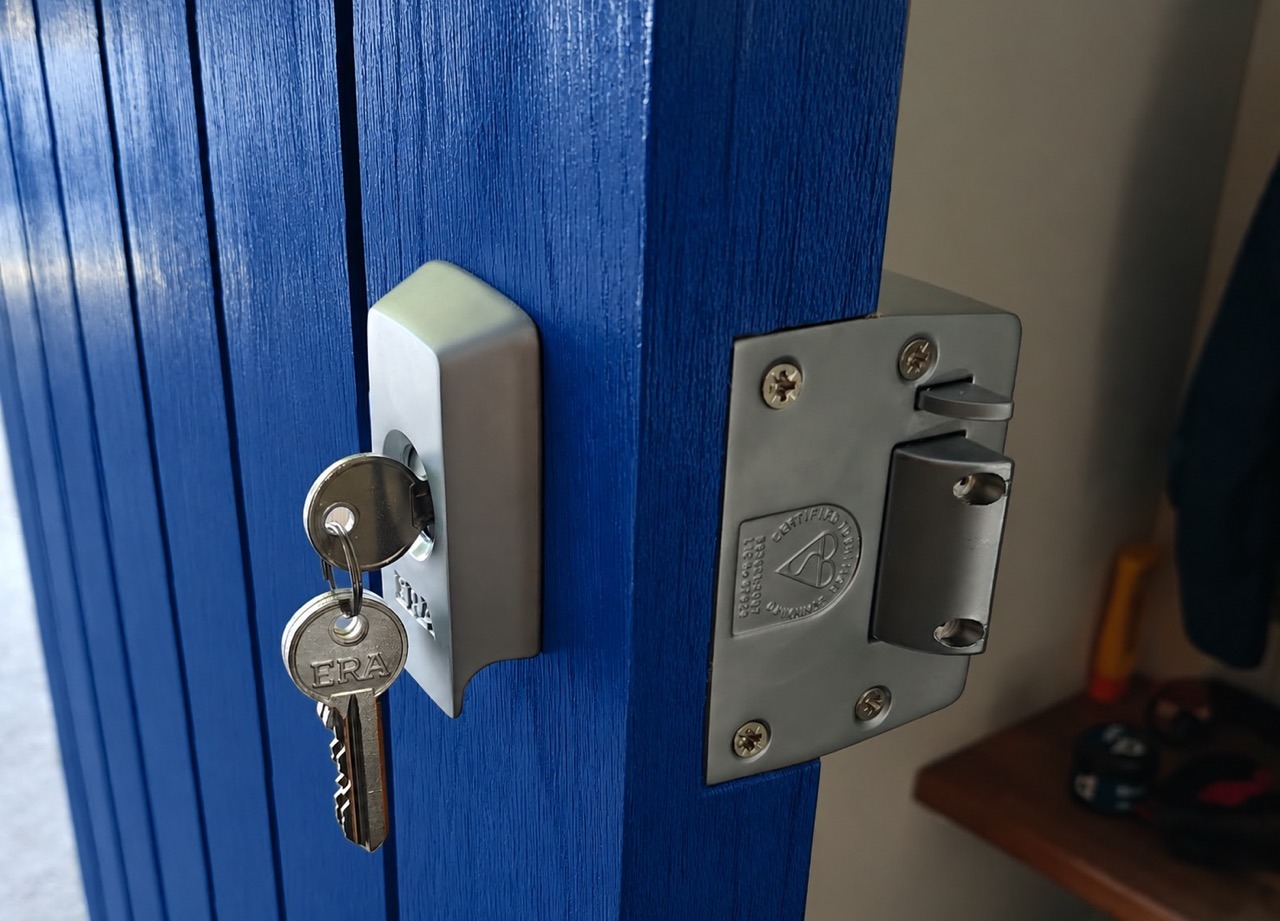
Mortice locks on timber doors: open the door and look at the metal faceplate on its edge. If you see the Kitemark and “BS3621”, the lock conforms to the standard most policies name. If the faceplate is blank or shows only a brand name, assume it doesn’t.
uPVC doors: the same checks apply to composite front doors. Look at the face of the cylinder, where the key goes in. An approved cylinder shows the Kitemark with stars, or the Sold Secure Diamond logo. If there’s nothing there, it’s probably a basic cylinder that can be snapped in seconds.
A night latch on the front door: check the lock case on the inside of the door for a BS3621 marking.
If you can’t tell which lock type you’re looking at, call us on 07884 675 945, and we’ll help you identify it over the phone.
Your 2-minute insurance lock check
Ticked fewer than six? Call us on 07884 675 945 and we’ll tell you what needs changing.
Door locks for each type of door
Different doors need different types of locks. This section explains which door locks insurers typically expect on each door, and why each lock type matters.
Mortice lock on timber front doors
Timber doors, especially the wooden doors on London’s Georgian and Victorian houses, usually rely on a mortice lock. A mortice lock sits in a pocket cut into the edge of the door, rather than being screwed onto the surface. A deadlocking mortice lock requires a key to lock and unlock it from both sides. That is exactly why insurers like it: a burglar who breaks a glass panel can’t simply reach in and open the door.
On a timber front door, the usual requirement is a 5 lever mortice deadlock conforming to BS3621. We fit these from Banham, Ingersoll, Chubb, ERA and Union, and they are among the best locks for period doors in London.
Mortice deadlocks: why “5 lever” isn’t the whole story
Mortice deadlocks come in 3 lever and 5 lever versions. The number of levers affects how hard the lock is to pick, but only 5 lever mortice deadlocks certified to BS3621 meet the standard most policies name. Many older five lever mortice locks predate the current standard, so an old 5 lever mortice deadlock without the Kitemark may not satisfy your insurer.
The door frame matters too. The strongest mortice deadlocks can’t stop forced entry if the frame splits around the keep, the metal box the bolt shoots into. A steel strike box, a London bar or hinge bolts add extra security at little cost. Whenever we fit mortice deadlocks, we check the frame as well, because good mortice deadlocks are only as strong as the timber around them. For the same reason, we often reinforce the frame when upgrading older mortice deadlocks in period properties.
Night latch: convenient, but rarely enough on its own
A standard night latch is the round “Yale-style” rim lock on many London front doors. It will lock automatically when the door closes, which is handy, but a basic spring latch can often be slipped with a card, or opened by reaching through a letterbox or a broken glass panel.
Most insurers won’t accept a standard night latch as the only lock on a front door. The usual fix is to keep it for convenience and add a 5 lever mortice deadlock below it. Alternatively, you can replace it with a certified dead latch.
Dead latch and rim automatic deadlatch
A dead latch is a latch lock with a deadlocking feature. Once it is locked, the latch bolt can’t be pushed back. With some models, you double lock the latch by turning the key from outside, which only helps if you remember to do it.
A BS3621 rim automatic deadlatch goes further. It deadlocks automatically whenever the door shuts, and the internal handle locks with a key. Some policies accept a rim automatic deadlatch on the front door instead of a mortice deadlock, and others want both. Check which locks are referred to in your policy before choosing a dead latch.
Multi-point locking on uPVC and composite doors
Most modern uPVC and composite front doors use a multi-point locking system. A gearbox inside the door drives hooks, rollers and bolts into the frame at several locking points. Many insurers accept a multi-point locking system with at least three locking points. Most modern doors meet that, but there are two catches.
First, multi-point locking only works when you lock it with the key. It is the most common lock mistake we see on uPVC doors. Lifting the handle engages the locking points, and turning the key locks them in place. If you lift the handle and walk away without turning the key, the door isn’t properly locked.
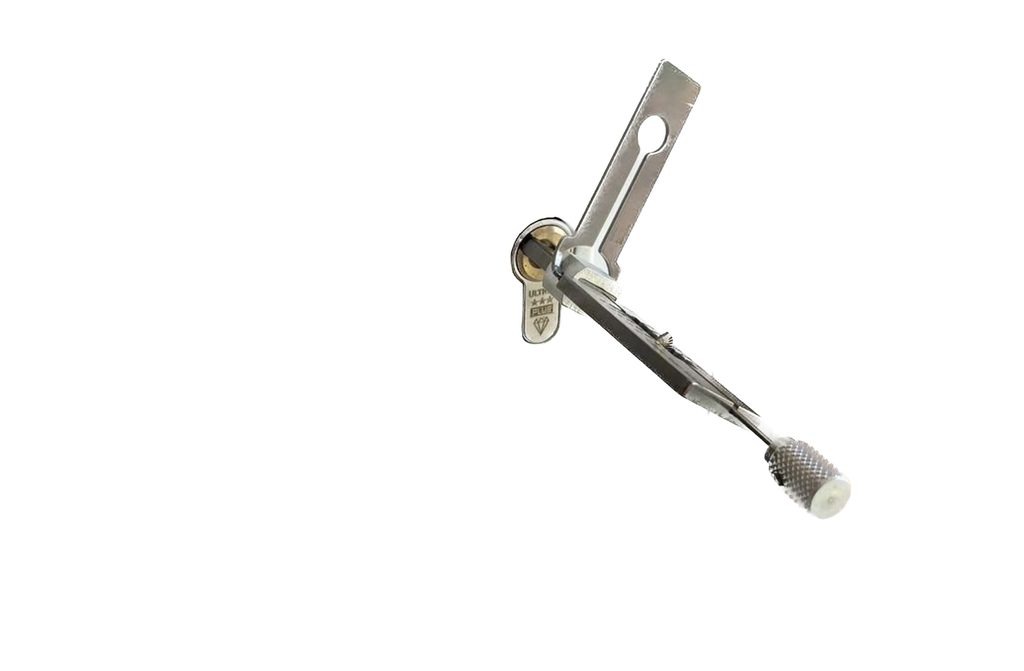
Second, the cylinder is the weak point. Standard euro cylinders are vulnerable to lock snapping, one of the most common ways burglars get into uPVC or composite doors. Upgrading to a TS007 3-star or SS312 Diamond cylinder, such as Ultion or Mul-T-Lock, protects against snapping attacks. It is quick and affordable, and usually the best value lock upgrade you can make.
If your door is stiff or won’t lock at all, the multi-point locking system itself may be failing. See our guide to composite door locking mechanism problems.
🔒 Not sure your cylinder is snap-proof? We can check it and fit a 3-star or Diamond-rated upgrade the same day, usually within about 30 minutes of your call. Call 07884 675 945
Dead latch and rim automatic deadlatch
A dead latch is a latch lock with a deadlocking feature. Once it is locked, the latch bolt can’t be pushed back. With some models, you double lock the latch by turning the key from outside, which only helps if you remember to do it.
A BS3621 rim automatic deadlatch goes further. It deadlocks automatically whenever the door shuts, and the internal handle locks with a key. Some policies accept a rim automatic deadlatch on the front door instead of a mortice deadlock, and others want both. Check which locks are referred to in your policy before choosing a dead latch.
Patio doors, sliding patio doors and French doors
Patio doors are often the weakest point in a home, because they face the garden where burglars can work unseen. Older sliding patio doors can sometimes be lifted off their track. Insurers usually want a key-operated lock and an anti-lift device fitted. Newer sliding patio doors often have a multi-point locking system built in.
French doors need extra attention. A common policy requirement is key-operated security bolts at both the top and bottom of each door, plus a 5 lever mortice deadlock or multi-point locking on the door that closes last. Fixed glass panels and patio windows beside French doors should use toughened or laminated glass.
See our patio door lock repair service if your patio doors won’t lock properly.
Choosing the right lock type for back and side doors
Insurers usually treat all external doors you can leave by as final exit doors, not just the main entrance. That includes back doors, side doors and the internal door from an attached garage. The right lock type depends on the door:
Timber back doors: a 5 lever mortice deadlock to BS3621.
uPVC or composite doors: a multi-point locking system with a 3-star or Diamond-rated cylinder.
Outside doors you never use as an exit: key-operated security bolts fitted on the inside may be acceptable.
If you’re unsure which lock type your policy expects on each of your external doors, the lock requirements section should list them. If it doesn’t, ask your insurance provider to confirm in writing.
Window locks and accessible windows
Many policies require key-operated window locks on all accessible windows. That usually means ground floor and other downstairs windows, basement windows, and any window reachable from a flat roof, balcony or drainpipe.
You can get home insurance without window locks. However, if a policy makes them a condition, a claim involving entry through an unlocked window could be reduced or refused.
Sash windows are common across London, especially in period areas like Kensington, Notting Hill and Chelsea. They can be secured with key-operated sash stops or dual screws. These fit into the window frame without spoiling the look of period windows, and still let you open the window slightly for ventilation. On uPVC windows, check that the handle has a lock that works with a key, and that you actually lock it. See our window lock installation page.
Are thumbturn locks insurance approved?
Often, yes, if the lock is certified to BS8621 or BS10621. Some policies name only BS3621, so check your wording or ask your insurer.
There is one risk to be aware of. A thumbturn near a glass panel or letterbox can sometimes be reached from outside, so a letterbox guard or a dual-mode lock is worth considering.
In flats, thumbturns are often preferred for fire safety. If your front door is a fire door, check with the building manager before changing the lock.
Are smart locks insurance approved?
Some smart locks now carry TS007 or SS312 Diamond certification, but many don’t. Policies also still tend to name traditional door locks and standards. If you want smart locks, choose a certified lock with a physical key override, and tell your insurance provider what’s fitted.
Keeping a BS3621 deadlock as an additional lock for when the property is empty gives you extra security, and it avoids any doubt at claim time. Smart locks work best as additional security, not as a replacement for approved locks.
Do Banham, Ingersoll, Mul-T-Lock and Ultion count as approved locks?
The best locks for insurance purposes, across all types of locks, are simply the ones certified to the standard your policy names. The brand doesn’t settle it. All four brands make approved door locks, and we install all of them. We carry the main types of locks with us, so most upgrades can be done in one visit:
Banham: its mortice deadlocks are made to BS3621, and it offers strong key control.
Ingersoll: a long-standing choice for period London homes, with BS3621 mortice locks.
Mul-T-Lock: many of its cylinders carry TS007 3-star or SS312 Diamond ratings.
Ultion: its cylinders are rated TS007 3-star and SS312 Diamond.
Always check the specific lock model fitted on your door, because not every lock a brand makes is certified. For a full cost and security comparison, read our Banham vs Ingersoll vs Mul-T-Lock comparison.
London flats, period homes and student accommodation
London’s housing stock brings a few extra considerations that generic insurance guides tend to miss.
- Converted period houses: these often have a shared street door and a separate flat door. Your policy usually covers your own flat door, not the communal one.
- Mansion blocks: flat doors in these buildings are often fire-rated, which limits which door locks can be fitted.
- Higher-value homes: specialist insurers may ask for more than the basics, such as a monitored alarm or a security survey.
- Student accommodation: in shared houses, contents policies often only pay for theft from a bedroom if there was forced entry, so a proper lock on each bedroom door matters.
Can the right locks get you cheaper home insurance?
Sometimes. Insurers often ask about your door locks and window locks when you get a quote. Homes with insurance-approved locks may be seen as a lower risk, which can help you get cheaper home insurance with some insurers. No discount is guaranteed.
After upgrading, it’s worth updating your insurer and taking the time to compare home insurance quotes, since insurers may treat the same security differently. Never declare locks you don’t have: that could invalidate your home insurance.
What happens if you don’t have the correct locks fitted?
Many home insurance policies only pay theft claims where there was a forced break-in. Many also have security conditions that require the locks named in the policy to be fitted and used. If you didn’t have the correct locks fitted, and that failure is relevant to the loss, your insurer may reduce or refuse the claim. For example, this could happen if a burglar got in through patio doors that didn’t meet the policy’s requirements.
Burglaries also rise through the darker months, so it’s worth checking your locks before winter. See our guide to protecting your home when the clocks go back.
The simplest protection is to check your policy now and make sure you have the right locks on every exit door and accessible window. If you’ve already suffered a break-in, see our burglary repair and lock change after a break-in services.
Keeping your home secure: choosing a professional locksmith
Choose a professional locksmith who knows the insurance standards. Membership of a trade body such as the Master Locksmiths Association is one sign of a vetted locksmith. Just as important is experience fitting British Standard locks and a clear guarantee. Wherever you are in London, a good locksmith will check all your doors and windows, not just the front door. They will fit locks that match your policy wording, and they can tell you exactly what’s fitted so you can pass it on to your insurer.
At Kensington Locksmith London, we’re based at 28 Pitt Street, W8, and we can usually reach you within about 30 minutes. We fit BS3621 and TS007-rated locks from brands including Banham, Ingersoll, Mul-T-Lock, Ultion, Yale and ERA. We guarantee both our work and the locks we supply, so every lock we fit is covered, and we accept card payments.
A few changes are enough to keep most homes secure and properly insured. Break-ins happen quickly, and the right locks make your home a harder target than the one next door.
FAQ
Which door locks are insurance approved?
For timber doors, a 5 lever mortice deadlock conforming to BS3621. For uPVC and composite doors, a multi-point locking system with at least three locking points and a 3-star or Diamond-rated cylinder. Check your home insurance policy for its exact wording.
Is a night latch enough for home insurance?
Usually not on its own. Most policies want a 5 lever mortice deadlock on the front door, or a BS3621 rim automatic deadlatch. Many homes use a night latch together with a mortice deadlock.
What locks do French doors need for insurance?
Many insurers ask for key-operated security bolts at the top and bottom of each door, plus a deadlock or multi-point locking on the door that closes last.
Do I need window locks for home insurance?
Many policies require a key-operated lock on every window that is easy to reach, such as ground floor windows and windows reachable from flat roofs. Check the lock requirements in your home insurance documents.
Can I fit an insurance-approved lock myself?
You can, but a lock only protects you if it is fitted correctly. A badly fitted lock, or a mortice lock cut into a weak door, may fail under attack and may not be accepted by your insurer. A professional locksmith can fit the lock properly and confirm which door locks you now have.
How do I know if my lock is BS3621?
Look for the British Standard Kitemark and “BS3621” stamped on the faceplate on the edge of the door. If it isn’t marked, assume the lock doesn’t meet the standard.
“Amazing locksmith services in Kensington! They are great with lock repair and can help with British Standard mortice locks.”
Amalia Bocuzzi, Holland St, Kensington
Book an insurance security check in Kensington and West London
Not sure whether your door locks meet your home insurance policy? Our house security assessment checks every one of your external doors and accessible windows against the standards insurers use, including BS3621 and TS007. Most visits take under an hour, and if a lock needs replacing, we can usually do it the same day. Afterwards, you get a clear written summary of what we found, what needs upgrading and what it will cost, with no pressure to fit anything you don’t need.
We’re available 24/7 and cover Kensington, South Kensington, Notting Hill, Chelsea, Knightsbridge, Hammersmith, Fulham and the rest of West and South West London.
Written by the Kensington Locksmith London team, fitting British Standard locks across West London from our base on Pitt Street, W8.
