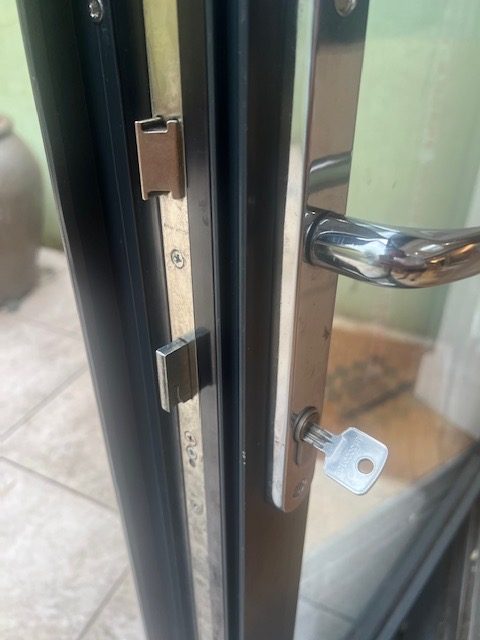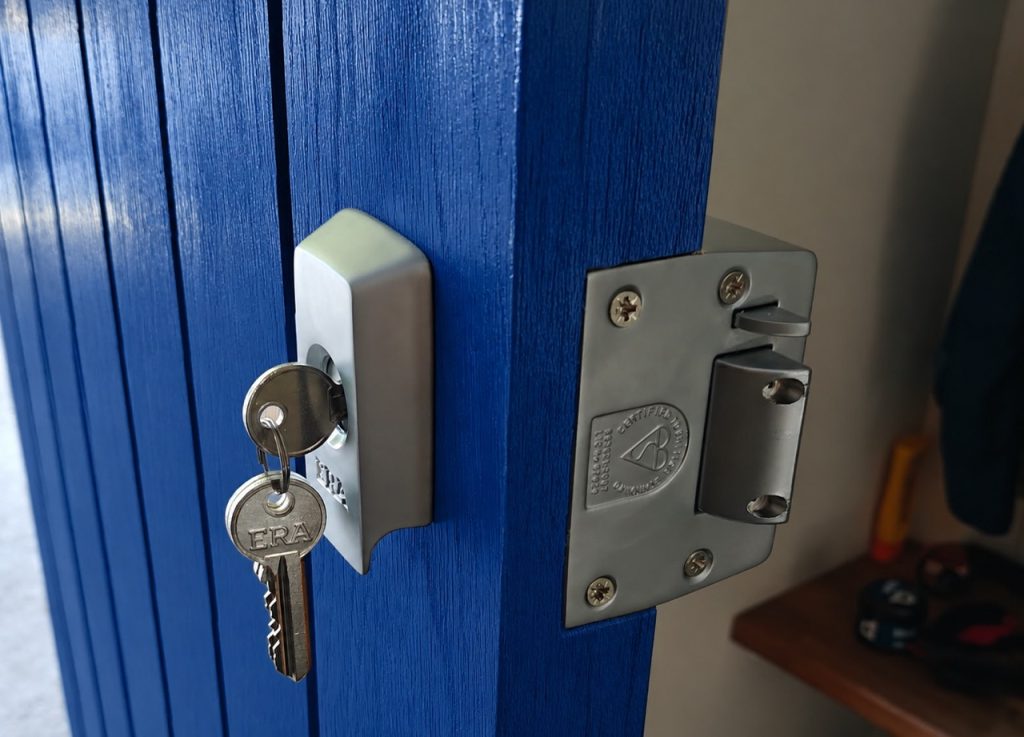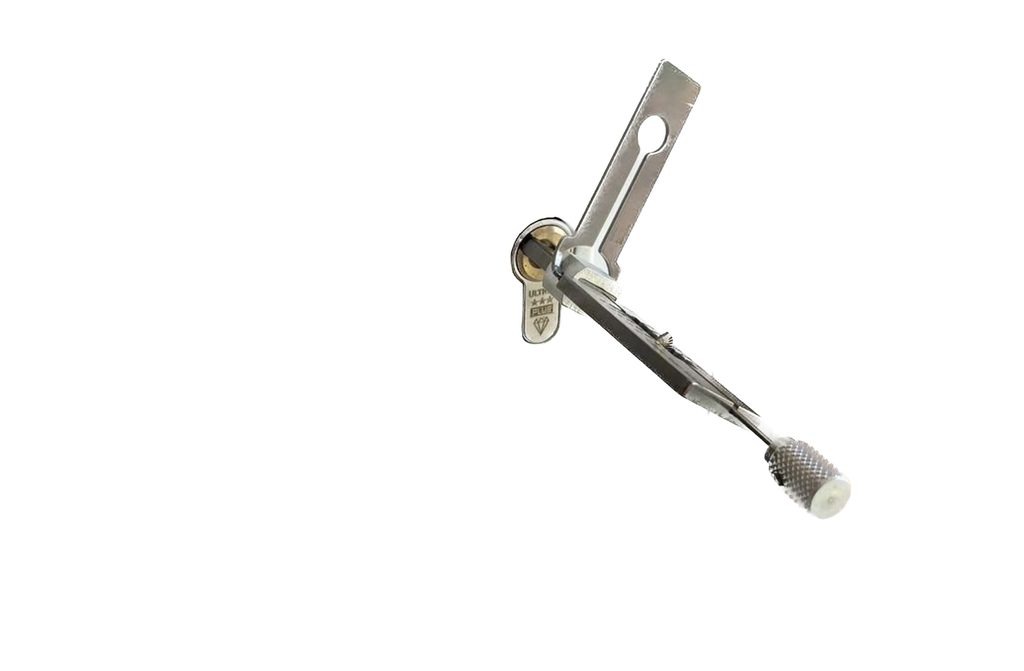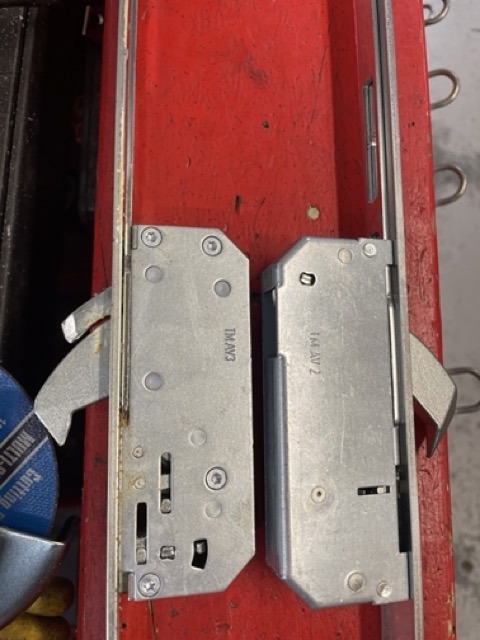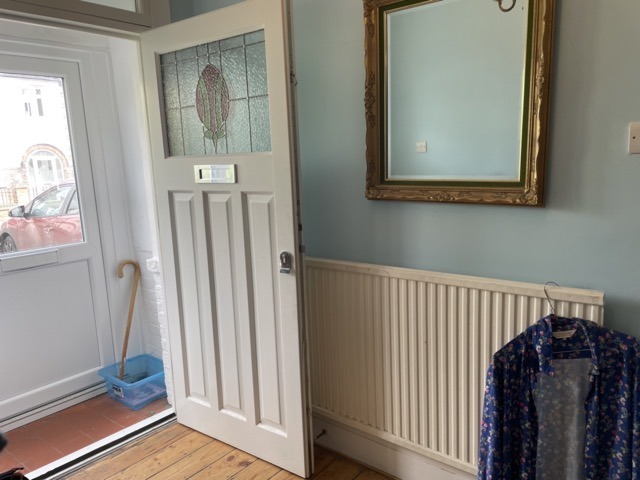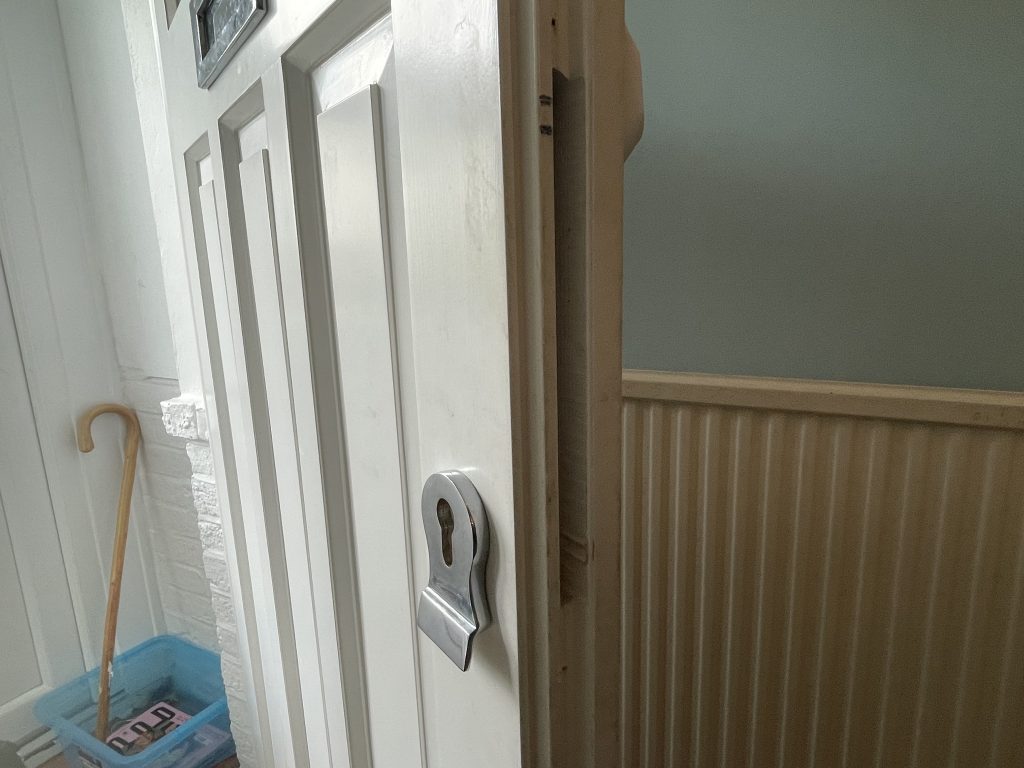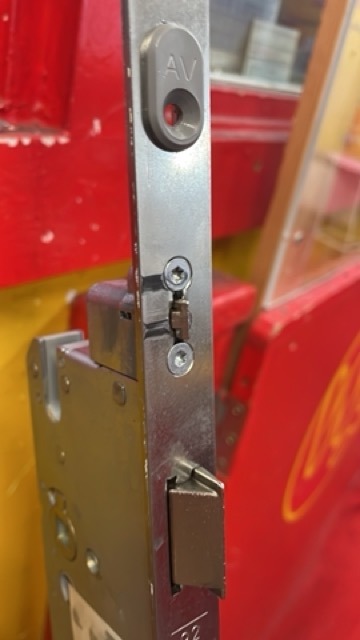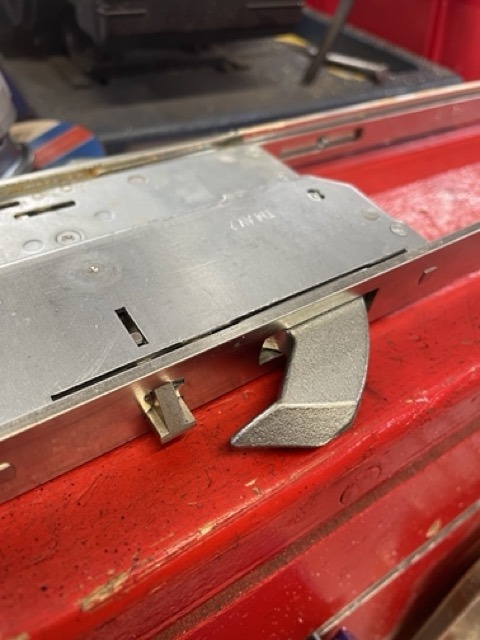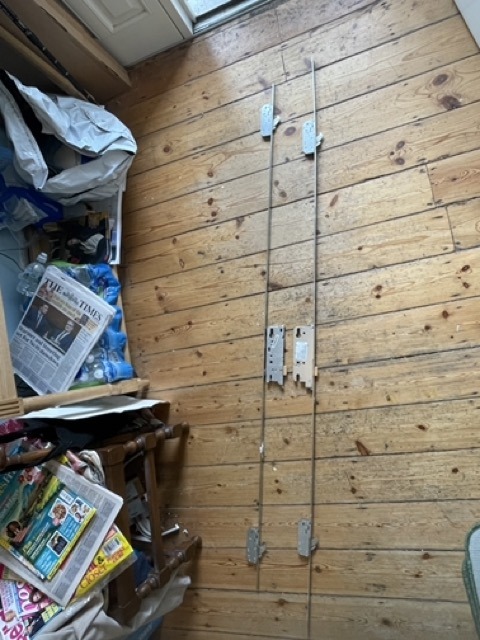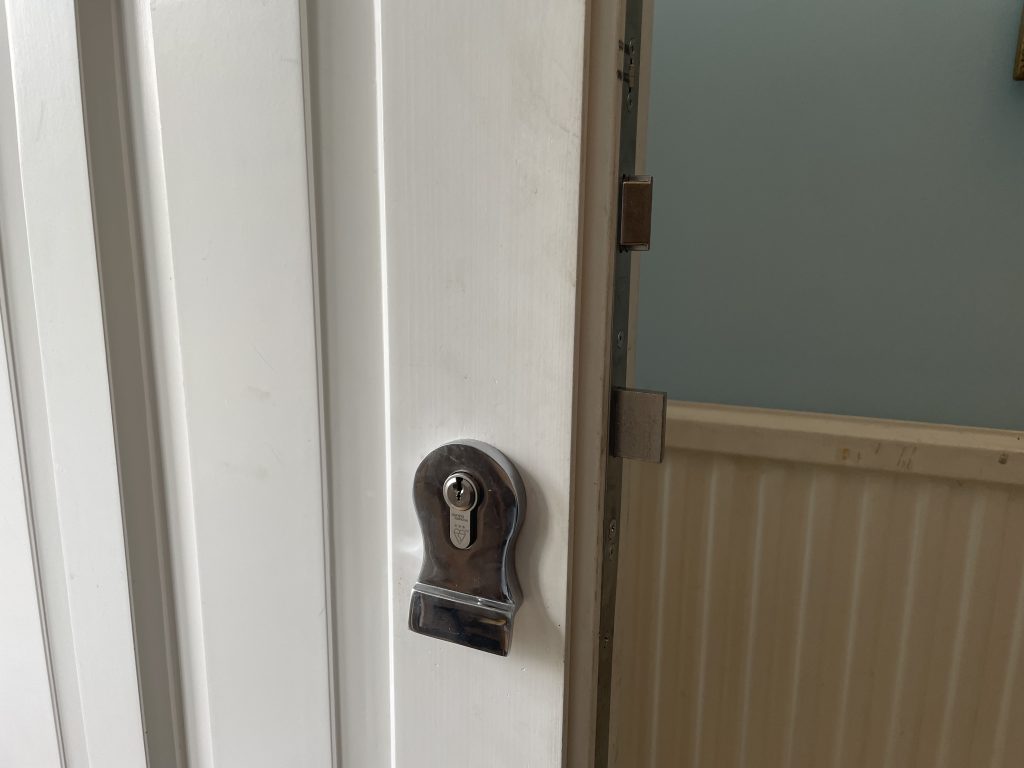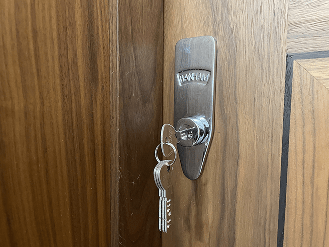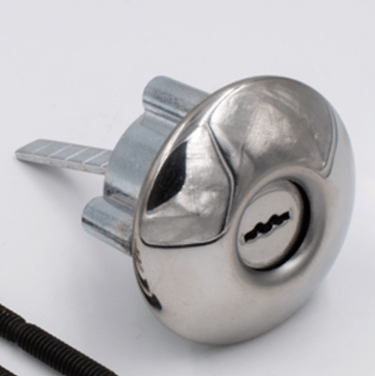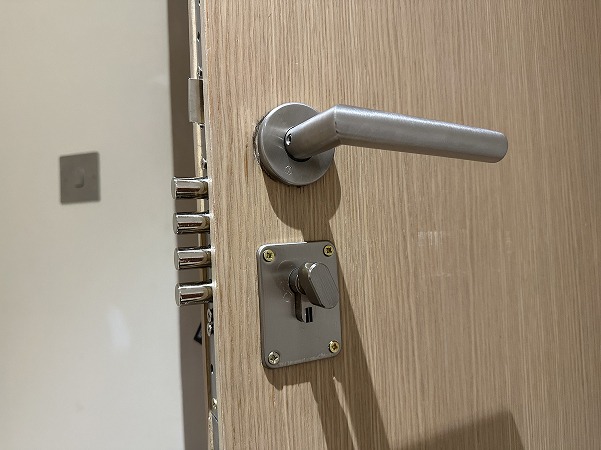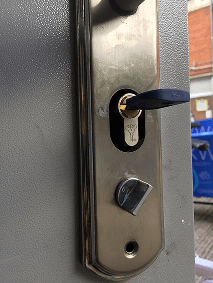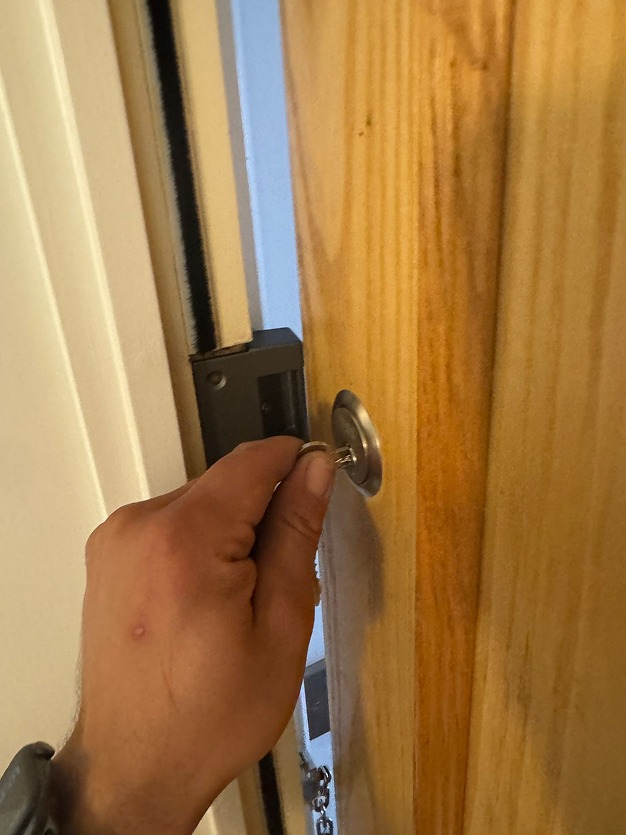
snapped cylinder lock West London
Clocks Go Back on 25 October: Why Winter Burglars Test Your Locks, Not Your Lights

Last updated: October 2026 · Written by the Kensington Locksmith London team

Every October, the same advice does the rounds: leave a lamp on, set a timer, close the curtains. It isn’t wrong, but it misses what changes in winter. Lights help burglars decide which house looks unoccupied. What happens next depends on your door, your windows and your locks. Good locks are what stop thieves once they reach the door, and the right locks protect your home whether you’re in or out.

At Kensington Locksmith London, a locksmith company based on Pitt Street in Kensington, we spend the dark months repairing doors after a break-in. This guide gives you expert advice from that side of the door: how locks actually fail, why the euro cylinder is the weak point on most London front doors, and a ten-minute check you can do on 25 October. If you only have time for a few tips, start with the section on anti-snap locks.

Clocks Go Back Burglary: Why the Risk Rises From 25 October

British Summer Time ends on Sunday 25 October, and London’s sunset moves an hour earlier, to 4.49pm. It then gets earlier by around 15 minutes a week until 21 December.

That creates what we call the dark gap: the hours between sunset and when most people get home. From late October, a home with no lights on at 5.30pm looks empty from the pavement, at a time when someone standing at a front door attracts no attention.

The figures show the effect:

  • The Met Police runs its annual Operation Bumblebee campaign to tackle the roughly 25% rise in home burglary usually seen in autumn and winter.
  • Co-op Insurance’s claims data shows home theft claims rise by 38% in the five months after the time change.
  • Ten years of Aviva claims data shows a 28% rise in burglary claims on Bonfire Night, the worst date of the year for burglary.

To keep this in proportion, London burglary is at its lowest level in forty years. Your home is not under siege. The point is that the risk is concentrated in a predictable window, so a few simple measures now go a long way.

The Winter Shift: From Open Doors to Breaking In

This is the part most guides miss. In summer, a lot of crime is opportunistic: an open window, an unlocked back door. In winter, insurers see more forced and violent entry.

That changes what will protect you. A lamp on a timer may stop burglars choosing your property, but once someone is at your door in the dark, the outcome depends on whether your lock resists snapping, whether your latch can be slipped, and whether your door frame holds.

There’s a second reason this matters. The Met estimates that about a third of residential burglaries show no sign of forced entry. Many home insurance policies only pay out for theft involving forced entry, so an unlocked door can cost you twice: once in the burglary, and again if your insurer refuses the claim. Our guide to insurance-approved door locks explains what most policies require.

Euro Cylinder Lock: The Weak Point on Most London Doors

Most uPVC doors and composite doors in London, and many newer timber ones, use a euro cylinder lock. The euro cylinder is the part your key goes into. Turning the key moves a cam in the middle of the cylinder, and that cam drives the multi-point lock along the edge of the door.

The weakness is the design itself. A standard euro cylinder has a thin section in the middle, where the fixing screw passes through. That’s the part burglars attack, and it’s why snapping is such a common method.

Lock Snapping: How It Works and Why It Matters in Winter

Lock snapping is a type of attack in which the cylinder is broken at its weak middle section. Once the cylinder snaps, the lock can be opened from outside in seconds, even on a door with several locking points. It needs only basic tools, and criminals who use it rely on most homes still having standard locks. That’s why it’s one of the most common methods of breaking in through uPVC doors across the country.

We won’t explain the method in detail, but the signs are easy to spot afterwards: a cylinder broken off flush with the handle, or missing altogether. If you ever find that, call the police and a locksmith straight away.

Lock snapping is more likely to succeed when:

  • door handles are weak and offer no protection to the cylinder
  • the cylinder is a basic, unrated model, often the one fitted when the door was new
  • the cylinder sticks out more than a few millimetres past the handle, giving something to grip
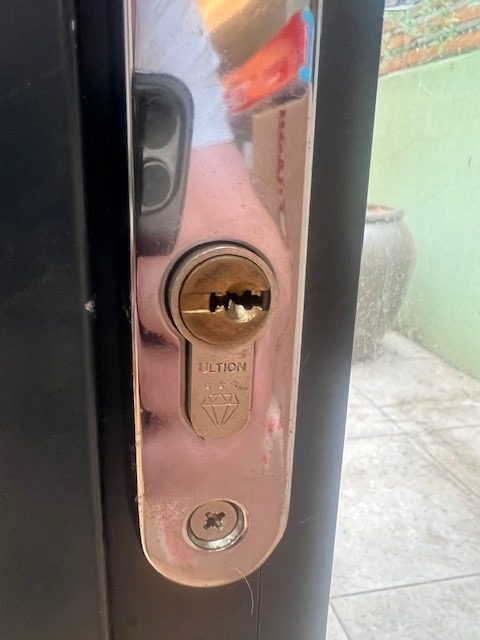
snapped cylinder lock West London
Lock replaced after a key snapped in the lock

Other Attacks on a Euro Cylinder

Bump attacks. Lock bumping uses a specially cut “bump key” to open a basic pin cylinder without damage. Good cylinders include anti-bump pins designed to prevent this.

Picking and drilling. Cheaper cylinders offer little resistance. Better ones add anti-pick and anti-drill protection.

With a basic euro cylinder, it’s often lock snapping first, bumping second. A rated cylinder protects against all of these.

Anti Snap Lock Cylinders: What to Look For

Anti-snap lock cylinders, often sold simply as anti-snap locks, are designed so that, if someone attacks the cylinder, only a sacrificial front section breaks off. The part that operates the lock stays inside the door, still locked. Many also include anti-bump, anti-pick and anti-drill protection, so they protect against more than snapping alone. For example, a Diamond-rated cylinder is tested against snapping, bumping, picking and drilling.

Before you purchase or fit anti-snap lock cylinders, look for these markings on the face of the cylinder:

  • TS007 3-star: the Kitemark standard for cylinders. A 3-star cylinder is the level most insurers and the police recommend.
  • SS312 Diamond: Sold Secure’s highest rating for cylinders, tested against snapping, bumping, picking and drilling.

A 1-star cylinder can achieve the same 3-star rating when paired with 2-star security handles. In practice, a 3-star cylinder is the simpler upgrade.

Not every cylinder sold as “anti-snap” carries either standard, so check for the markings before you buy. If there’s no marking, treat it as a standard euro cylinder.

Size and Fitting Matter as Much as the Brand

A good cylinder fitted badly is still at risk, so ensure it’s the right size. The cylinder should sit almost flush with the handle on the outside, with no more than a few millimetres showing. To measure, go from the centre fixing screw to each end. Getting the measure right is what makes the cylinder sit flush and resist snapping. However, it’s easy to buy the wrong size online, and a cylinder that sticks out undoes much of the benefit. If you’re unsure, a locksmith can measure, supply and install it correctly in one visit, and you can purchase the cylinder at the same time.

High Security Lock Options We Fit

The best high security lock for you depends on your door, but these are the cylinders we’re asked about most:

  • Ultion: rated TS007 3-star and SS312 Diamond, with a lock-hunter feature designed to keep the door locked even if the front of the cylinder is attacked.
  • Mul-T-Lock: many of its cylinders carry 3-star or Diamond ratings, with strong key control.
  • Avocet ABS: a well-known anti-snap cylinder, also rated to 3-star and Diamond levels.

All three are a big step up from the cylinder most doors came with. The cost of a good cylinder is small compared with the cost of a break-in, and upgrading your locks usually takes well under an hour. Upgrading the cylinder is the single most effective security measure for most uPVC doors. For a timber front door, the equivalent high security lock is a BS3621 mortice deadlock. Our Banham vs Ingersoll vs Mul-T-Lock comparison covers those options.

What Burglars Look For at Your Door

From what we see after a burglary, burglars look for a few things before choosing a home:

  • old, unrated locks that are open to snapping, especially a cylinder that sticks out past the handle
  • a front door where only the latch is locked
  • locks they can reach through a letterbox or glass panel
  • back doors and patio doors with weak locks, out of sight of neighbours

If you can find any of these on your own property, that’s where to start. Most can be fixed the same day.

Other Ways Doors Fail After Dark

Doors closed but never locked. On a multi-point door, closing it isn’t locking it. You need to lift the handle and turn the key. Met officers make the same point every autumn: the front door is still the number one point of entry. If your handle won’t lift or the key won’t turn, that’s a fault to fix now. See our composite door lock repair page.

Night latches on their own. A basic latch locks automatically, which is convenient, but it can often be slipped. If it’s your only lock, add a deadlock or upgrade to a deadlocking latch. See our night latch installation page.

Keys and letterboxes. Keys left on a hall table can be fished through the letterbox, and a thumbturn near a letterbox can sometimes be reached from outside. Leave nothing on the hall table, keep every key away from the door, and fit a letterbox guard to prevent fishing.

Patio doors lifted off their tracks. Older sliding doors at the back of houses, out of sight, can sometimes be lifted out without breaking anything. An anti-lift device and a key-operated lock prevent this. See our patio door lock repair page.

The London Weak Spots Generic Guides Don’t Mention

Basement flats and lightwells. Below street level and out of sight, often with older doors and windows.

Shared street doors. In converted houses and mansion blocks, the communal door is often held open for strangers, so your own flat door needs to be just as secure as a house front door.

Sash windows. Often secured with nothing more than the original catch. Key-operated sash stops protect period windows and let you leave the window slightly open for air whilst stopping it opening further. See our window lock installation page.

Christmas and holiday absences. Central London has many homes left empty over Christmas, with presents and jewellery inside. If you’ll be away, ask trusted neighbours to keep an eye out, and remember that your locks are doing all the work while you’re gone.

The 10-Minute Check for Sunday 25 October

Do this after dark on 25 October. Start on the pavement and look at your home the way a stranger would.

Your 10-minute door and window check

If you answered “no” or “not sure” to any of points 4 to 8, those are the jobs to get done before November. Call us on 07884 675 945 and we’ll sort them out.

Simple Measures That Support Your Locks

Strong locks are your main protection, but these simple security tips help ensure burglars never test them:

  • Use a timer on lamps and a radio so your home looks lived in, and adjust it as sunset gets earlier.
  • Fit sensor lights at the side and back of the property.
  • Keep valuables and jewellery where thieves can’t spot them from the street.
  • Leave a light on in a room you’d normally use, not just the hallway.
  • Join or start a neighbourhood watch. Neighbours who know each other notice when something is wrong.
  • Don’t post holiday plans online until you’re back.

Your Dark-Season Calendar

Key dates from late October to December

Date Why it matters What to do
Sunday 25 October British Summer Time ends; dark by 4.49pm Do the 10-minute check and reset your timers
Saturday 31 October Halloween: lots of strangers at the door Keep the door locked between visitors; don’t leave keys near it
Thursday 5 November Bonfire Night: the worst date of the year for burglary claims Lock up before you go out, and leave lights and a radio on
November The busiest month for burglaries Get any lock faults or upgrades fixed now
Mid-December Sunset before 4pm Check that timers come on earlier
Late December Homes empty, presents visible Keep gifts out of sight; double-check locks before travelling

Want it sorted before November? Call us on 07884 675 945 and we’ll check your locks and fix any faults the same day.

If You Become a Victim of a Break-In

  1. Don’t go inside if you think someone may still be there. Call 999.
  2. Report the crime and get a crime reference number. Insurers almost always ask for it first.
  3. Photograph the damage before anything is repaired, and don’t move any tools or items left behind.
  4. Secure the property the same day. A snapped cylinder or forced door leaves you exposed overnight, and we can support you with emergency repairs. See our burglary repair service.
  5. Change the locks if keys may have been taken. See changing locks after a robbery.
  6. Keep every receipt for your claim.

Burglary affects more than property. Many people feel unsettled at home for weeks afterwards, so don’t hesitate to ask for support and to speak to someone about it. Victim Support offers free help across the UK, and you can find details on its website.

FAQ

Is lock snapping common in London?

Yes. Lock snapping remains one of the most common ways burglars get through uPVC doors, because so many homes still have standard locks. Anti-snap locks are the best way to prevent it.

Can burglars still get in with anti-snap locks?

No lock is impossible to defeat, but rated anti-snap locks make snapping far harder and slower, and most burglars move on to an easier home. That’s the point: make your property harder than the one next door.

How long does it take to change to anti-snap locks?

Usually well under an hour per door, including measuring and fitting.

Who should I ask for advice on my locks?

A locksmith who knows the security standards. We’ll check every door and give you honest advice on which locks need upgrading and which don’t.

When do the clocks go back in 2026?

Sunday 25 October, at 2am. London sunset that day is 4.49pm.

Do burglaries really go up in winter?

Yes. Police and insurers both record a rise through autumn and winter, with Bonfire Night the worst single date for claims.

What are anti-snap lock cylinders?

Cylinders designed so only a sacrificial front section breaks if attacked, keeping the door locked. Look for TS007 3-star or SS312 Diamond markings.

How do I know if my euro cylinder is snap-resistant?

You can find the marking on the face of the cylinder: look for the Kitemark with three stars or the Sold Secure Diamond logo. No marking usually means a standard cylinder.

What’s the most useful security upgrade before winter?

For most uPVC doors and composite doors, a 3-star or Diamond-rated euro cylinder, fitted at the right size. For timber front doors, a BS3621 deadlock if you only have a night latch.

Get Your Home Checked Before November

The Kensington Locksmith London house security assessment checks every external door and accessible window against the standards insurers use, including BS3621 and TS007, whatever the complexity of your property. Most visits take under an hour, and you get a written summary of what we found and what any upgrades would cost. If a cylinder or lock needs replacing, we can usually do it the same day, so your family can feel secure through the darkness of winter. Whoever lives in the home, from students to older relatives, good locks protect everyone inside.

Speak to us 24/7 for advice on locks across Kensington, Notting Hill, Chelsea, Knightsbridge, Hammersmith, Fulham and the rest of West and South West London, or visit our security assessment page to book.

Call 07884 675 945
Book a security check

BS3621 Kitemark on a mortice lock faceplate
Insurance-Approved Door Locks in London: What Your Policy Actually Requires (2026 Guide)

Last updated: September 2026

Most people only read the security section of their home insurance policy after a break-in. By then it’s too late to find out the front door had the wrong lock. As locksmiths based at 28 Pitt Street in Kensington, we deal with break-ins across London every week.

We often find locks that don’t match what the homeowner’s insurance provider expected: the wrong lock type on the back door, a basic cylinder that snaps easily, or no key-operated window locks downstairs.

Call us now if you need a fast locksmith in Kensington and nearby areas. We are prepared to help you with all types of insurance-approved door locks, and we can also offer advice or solutions.

This guide explains what insurers usually mean by insurance-approved door locks, how to check the locks on your doors and windows, and what to change if they fall short.

Quick answer: Most policies require the front door and every other final exit door to have either a 5 lever mortice deadlock conforming to BS3621, or a multi-point locking system with at least three locking points. French doors usually need key-operated security bolts. Sliding patio doors need a key-operated lock plus an anti-lift device. Accessible windows need key-operated window locks. Wording varies between policies, so always check the lock requirements in your own home insurance documents.

Door or windowWhat most insurers ask forHow to check
Wooden front door5 lever mortice deadlock to BS3621Kitemark and “BS3621” on the faceplate
uPVC or composite front doorMulti-point locking system with three locking points and a 3-star cylinderKitemark with stars on the cylinder face
Sliding patio doorsLocks that need a key, plus an anti-lift deviceTry lifting the door from inside; it shouldn’t move
French doorsKey-operated security bolts top and bottom, plus a deadlockBolts should need a key to open
Windows you can reach from outsideLockable handles or sash stops that need a keyHandle or stop should have a keyhole

What insurance-approved door locks actually mean

Insurers don’t approve individual products. Instead, your home insurance policy sets a minimum standard. Any lock that meets that standard counts as one of the insurance-approved locks your insurance provider is asking for. Typical policy wording reads something like: “All final exit doors must be secured by a five lever mortice deadlock to BS3621.” If your lock meets that standard, it is approved for that policy, whatever the brand. The same lock might not satisfy a different insurer, which is why reading your own home insurance wording matters.

That’s why the details matter. Two door locks can look almost identical, and only one may carry the British Standard Kitemark. The difference is inside the lock: tested resistance to drilling, picking and forcing. Many policies also say that the locks referred to in the policy must actually be locked whenever the home is empty. Having secure locks fitted isn’t enough if you don’t use them.

Types of locks insurers ask for

These are the types of locks and standards that appear most often in UK home insurance policies:

BS3621

The main British Standard for thief-resistant door locks that need a key to open from both sides. A BS3621 5 lever mortice deadlock is the classic insurance-approved lock for wooden front doors.

BS8621

The same security level, but the lock opens with a thumbturn from inside so you can get out quickly without a key. It is common in flats.

BS10621

A dual-mode lock. It works like a thumbturn lock while you’re home and can be switched to key-only when you go out.

TS007

The Kitemark scheme for euro cylinders and handles on uPVC and composite front doors. A 3-star cylinder is the level most insurers look for.

SS312 Diamond

Sold Secure’s top rating for cylinders, tested against lock snapping and other attack methods.

PAS 24

A standard for the complete doorset (door, door frame and hardware tested together). It is common on new external doors.

Knowing these types of locks, and which lock type each standard applies to, makes it much easier to read your policy and to talk to your insurance provider or locksmith. Other locks you’ll find on London homes, such as basic rim locks, 3 lever mortice locks and standard euro cylinders, don’t meet any of these standards.

Door lock type: how to check what’s fitted

Before you buy anything, work out which door lock type you already have on each door. It takes two minutes to check the door locks you have now, and it tells you whether each lock conforms to your policy or needs replacing.

BS3621 Kitemark on a mortice lock faceplate

Mortice locks on timber doors: open the door and look at the metal faceplate on its edge. If you see the Kitemark and “BS3621”, the lock conforms to the standard most policies name. If the faceplate is blank or shows only a brand name, assume it doesn’t.

uPVC doors: the same checks apply to composite front doors. Look at the face of the cylinder, where the key goes in. An approved cylinder shows the Kitemark with stars, or the Sold Secure Diamond logo. If there’s nothing there, it’s probably a basic cylinder that can be snapped in seconds.

A night latch on the front door: check the lock case on the inside of the door for a BS3621 marking.

If you can’t tell which lock type you’re looking at, call us on 07884 675 945, and we’ll help you identify it over the phone.

Your 2-minute insurance lock check

Ticked fewer than six? Call us on 07884 675 945 and we’ll tell you what needs changing.

Door locks for each type of door

Different doors need different types of locks. This section explains which door locks insurers typically expect on each door, and why each lock type matters.

Mortice lock on timber front doors

Timber doors, especially the wooden doors on London’s Georgian and Victorian houses, usually rely on a mortice lock. A mortice lock sits in a pocket cut into the edge of the door, rather than being screwed onto the surface. A deadlocking mortice lock requires a key to lock and unlock it from both sides. That is exactly why insurers like it: a burglar who breaks a glass panel can’t simply reach in and open the door.

On a timber front door, the usual requirement is a 5 lever mortice deadlock conforming to BS3621. We fit these from Banham, Ingersoll, Chubb, ERA and Union, and they are among the best locks for period doors in London.

Mortice deadlocks: why “5 lever” isn’t the whole story

Mortice deadlocks come in 3 lever and 5 lever versions. The number of levers affects how hard the lock is to pick, but only 5 lever mortice deadlocks certified to BS3621 meet the standard most policies name. Many older five lever mortice locks predate the current standard, so an old 5 lever mortice deadlock without the Kitemark may not satisfy your insurer.

The door frame matters too. The strongest mortice deadlocks can’t stop forced entry if the frame splits around the keep, the metal box the bolt shoots into. A steel strike box, a London bar or hinge bolts add extra security at little cost. Whenever we fit mortice deadlocks, we check the frame as well, because good mortice deadlocks are only as strong as the timber around them. For the same reason, we often reinforce the frame when upgrading older mortice deadlocks in period properties.

Night latch: convenient, but rarely enough on its own

A standard night latch is the round “Yale-style” rim lock on many London front doors. It will lock automatically when the door closes, which is handy, but a basic spring latch can often be slipped with a card, or opened by reaching through a letterbox or a broken glass panel.

Most insurers won’t accept a standard night latch as the only lock on a front door. The usual fix is to keep it for convenience and add a 5 lever mortice deadlock below it. Alternatively, you can replace it with a certified dead latch.

Dead latch and rim automatic deadlatch

A dead latch is a latch lock with a deadlocking feature. Once it is locked, the latch bolt can’t be pushed back. With some models, you double lock the latch by turning the key from outside, which only helps if you remember to do it.

A BS3621 rim automatic deadlatch goes further. It deadlocks automatically whenever the door shuts, and the internal handle locks with a key. Some policies accept a rim automatic deadlatch on the front door instead of a mortice deadlock, and others want both. Check which locks are referred to in your policy before choosing a dead latch.

Multi-point locking on uPVC and composite doors

Most modern uPVC and composite front doors use a multi-point locking system. A gearbox inside the door drives hooks, rollers and bolts into the frame at several locking points. Many insurers accept a multi-point locking system with at least three locking points. Most modern doors meet that, but there are two catches.

First, multi-point locking only works when you lock it with the key. It is the most common lock mistake we see on uPVC doors. Lifting the handle engages the locking points, and turning the key locks them in place. If you lift the handle and walk away without turning the key, the door isn’t properly locked.

Ultion 3-star anti-snap cylinder

Second, the cylinder is the weak point. Standard euro cylinders are vulnerable to lock snapping, one of the most common ways burglars get into uPVC or composite doors. Upgrading to a TS007 3-star or SS312 Diamond cylinder, such as Ultion or Mul-T-Lock, protects against snapping attacks. It is quick and affordable, and usually the best value lock upgrade you can make.

If your door is stiff or won’t lock at all, the multi-point locking system itself may be failing. See our guide to composite door locking mechanism problems.

🔒 Not sure your cylinder is snap-proof? We can check it and fit a 3-star or Diamond-rated upgrade the same day, usually within about 30 minutes of your call. Call 07884 675 945

Dead latch and rim automatic deadlatch

A dead latch is a latch lock with a deadlocking feature. Once it is locked, the latch bolt can’t be pushed back. With some models, you double lock the latch by turning the key from outside, which only helps if you remember to do it.

A BS3621 rim automatic deadlatch goes further. It deadlocks automatically whenever the door shuts, and the internal handle locks with a key. Some policies accept a rim automatic deadlatch on the front door instead of a mortice deadlock, and others want both. Check which locks are referred to in your policy before choosing a dead latch.

Patio doors, sliding patio doors and French doors

Patio doors are often the weakest point in a home, because they face the garden where burglars can work unseen. Older sliding patio doors can sometimes be lifted off their track. Insurers usually want a key-operated lock and an anti-lift device fitted. Newer sliding patio doors often have a multi-point locking system built in.

French doors need extra attention. A common policy requirement is key-operated security bolts at both the top and bottom of each door, plus a 5 lever mortice deadlock or multi-point locking on the door that closes last. Fixed glass panels and patio windows beside French doors should use toughened or laminated glass.

See our patio door lock repair service if your patio doors won’t lock properly.

Choosing the right lock type for back and side doors

Insurers usually treat all external doors you can leave by as final exit doors, not just the main entrance. That includes back doors, side doors and the internal door from an attached garage. The right lock type depends on the door:

Timber back doors: a 5 lever mortice deadlock to BS3621.

uPVC or composite doors: a multi-point locking system with a 3-star or Diamond-rated cylinder.

Outside doors you never use as an exit: key-operated security bolts fitted on the inside may be acceptable.

If you’re unsure which lock type your policy expects on each of your external doors, the lock requirements section should list them. If it doesn’t, ask your insurance provider to confirm in writing.

Window locks and accessible windows

Many policies require key-operated window locks on all accessible windows. That usually means ground floor and other downstairs windows, basement windows, and any window reachable from a flat roof, balcony or drainpipe.

You can get home insurance without window locks. However, if a policy makes them a condition, a claim involving entry through an unlocked window could be reduced or refused.

Sash windows are common across London, especially in period areas like Kensington, Notting Hill and Chelsea. They can be secured with key-operated sash stops or dual screws. These fit into the window frame without spoiling the look of period windows, and still let you open the window slightly for ventilation. On uPVC windows, check that the handle has a lock that works with a key, and that you actually lock it. See our window lock installation page.

Are thumbturn locks insurance approved?

Often, yes, if the lock is certified to BS8621 or BS10621. Some policies name only BS3621, so check your wording or ask your insurer.

There is one risk to be aware of. A thumbturn near a glass panel or letterbox can sometimes be reached from outside, so a letterbox guard or a dual-mode lock is worth considering.

In flats, thumbturns are often preferred for fire safety. If your front door is a fire door, check with the building manager before changing the lock.

Are smart locks insurance approved?

Some smart locks now carry TS007 or SS312 Diamond certification, but many don’t. Policies also still tend to name traditional door locks and standards. If you want smart locks, choose a certified lock with a physical key override, and tell your insurance provider what’s fitted.

Keeping a BS3621 deadlock as an additional lock for when the property is empty gives you extra security, and it avoids any doubt at claim time. Smart locks work best as additional security, not as a replacement for approved locks.

Do Banham, Ingersoll, Mul-T-Lock and Ultion count as approved locks?

The best locks for insurance purposes, across all types of locks, are simply the ones certified to the standard your policy names. The brand doesn’t settle it. All four brands make approved door locks, and we install all of them. We carry the main types of locks with us, so most upgrades can be done in one visit:

Banham: its mortice deadlocks are made to BS3621, and it offers strong key control.

Ingersoll: a long-standing choice for period London homes, with BS3621 mortice locks.

Mul-T-Lock: many of its cylinders carry TS007 3-star or SS312 Diamond ratings.

Ultion: its cylinders are rated TS007 3-star and SS312 Diamond.

Always check the specific lock model fitted on your door, because not every lock a brand makes is certified. For a full cost and security comparison, read our Banham vs Ingersoll vs Mul-T-Lock comparison.

London flats, period homes and student accommodation

London’s housing stock brings a few extra considerations that generic insurance guides tend to miss.

  • Converted period houses: these often have a shared street door and a separate flat door. Your policy usually covers your own flat door, not the communal one.
  • Mansion blocks: flat doors in these buildings are often fire-rated, which limits which door locks can be fitted.
  • Higher-value homes: specialist insurers may ask for more than the basics, such as a monitored alarm or a security survey.
  • Student accommodation: in shared houses, contents policies often only pay for theft from a bedroom if there was forced entry, so a proper lock on each bedroom door matters.

Can the right locks get you cheaper home insurance?

Sometimes. Insurers often ask about your door locks and window locks when you get a quote. Homes with insurance-approved locks may be seen as a lower risk, which can help you get cheaper home insurance with some insurers. No discount is guaranteed.

After upgrading, it’s worth updating your insurer and taking the time to compare home insurance quotes, since insurers may treat the same security differently. Never declare locks you don’t have: that could invalidate your home insurance.

What happens if you don’t have the correct locks fitted?

Many home insurance policies only pay theft claims where there was a forced break-in. Many also have security conditions that require the locks named in the policy to be fitted and used. If you didn’t have the correct locks fitted, and that failure is relevant to the loss, your insurer may reduce or refuse the claim. For example, this could happen if a burglar got in through patio doors that didn’t meet the policy’s requirements.

Burglaries also rise through the darker months, so it’s worth checking your locks before winter. See our guide to protecting your home when the clocks go back.

The simplest protection is to check your policy now and make sure you have the right locks on every exit door and accessible window. If you’ve already suffered a break-in, see our burglary repair and lock change after a break-in services.

Keeping your home secure: choosing a professional locksmith

Choose a professional locksmith who knows the insurance standards. Membership of a trade body such as the Master Locksmiths Association is one sign of a vetted locksmith. Just as important is experience fitting British Standard locks and a clear guarantee. Wherever you are in London, a good locksmith will check all your doors and windows, not just the front door. They will fit locks that match your policy wording, and they can tell you exactly what’s fitted so you can pass it on to your insurer.

At Kensington Locksmith London, we’re based at 28 Pitt Street, W8, and we can usually reach you within about 30 minutes. We fit BS3621 and TS007-rated locks from brands including Banham, Ingersoll, Mul-T-Lock, Ultion, Yale and ERA. We guarantee both our work and the locks we supply, so every lock we fit is covered, and we accept card payments.

A few changes are enough to keep most homes secure and properly insured. Break-ins happen quickly, and the right locks make your home a harder target than the one next door.

FAQ

Which door locks are insurance approved?

For timber doors, a 5 lever mortice deadlock conforming to BS3621. For uPVC and composite doors, a multi-point locking system with at least three locking points and a 3-star or Diamond-rated cylinder. Check your home insurance policy for its exact wording.

Is a night latch enough for home insurance?

Usually not on its own. Most policies want a 5 lever mortice deadlock on the front door, or a BS3621 rim automatic deadlatch. Many homes use a night latch together with a mortice deadlock.

What locks do French doors need for insurance?

Many insurers ask for key-operated security bolts at the top and bottom of each door, plus a deadlock or multi-point locking on the door that closes last.

Do I need window locks for home insurance?

Many policies require a key-operated lock on every window that is easy to reach, such as ground floor windows and windows reachable from flat roofs. Check the lock requirements in your home insurance documents.

Can I fit an insurance-approved lock myself?

You can, but a lock only protects you if it is fitted correctly. A badly fitted lock, or a mortice lock cut into a weak door, may fail under attack and may not be accepted by your insurer. A professional locksmith can fit the lock properly and confirm which door locks you now have.

How do I know if my lock is BS3621?

Look for the British Standard Kitemark and “BS3621” stamped on the faceplate on the edge of the door. If it isn’t marked, assume the lock doesn’t meet the standard.

“Amazing locksmith services in Kensington! They are great with lock repair and can help with British Standard mortice locks.”
Amalia Bocuzzi, Holland St, Kensington

Read more reviews on Trustpilot

Book an insurance security check in Kensington and West London

Not sure whether your door locks meet your home insurance policy? Our house security assessment checks every one of your external doors and accessible windows against the standards insurers use, including BS3621 and TS007. Most visits take under an hour, and if a lock needs replacing, we can usually do it the same day. Afterwards, you get a clear written summary of what we found, what needs upgrading and what it will cost, with no pressure to fit anything you don’t need.

We’re available 24/7 and cover Kensington, South Kensington, Notting Hill, Chelsea, Knightsbridge, Hammersmith, Fulham and the rest of West and South West London.

Call 07884 675 945 · Book a security check

Written by the Kensington Locksmith London team, fitting British Standard locks across West London from our base on Pitt Street, W8.

Side by side comparison of old worn UPVC gearbox and new replacement unit
Why Your UPVC Door Lock Works Sometimes But Not Others — A Kensington Case Study

Why Your UPVC Door Lock Works Some Days and Not Others (A Real Job on Iverna Gardens, W8)

A few weeks ago, we had a call from a client on Iverna Gardens, just off Kensington High Street. She explained that her front door was behaving strangely… some mornings she could lock it without a problem, other times the cylinder would turn, but nothing would happen. Other times, the key felt stiff and heavy, she said. Also, some evenings she had to try three or four times before the door would actually lock.

When she called, she was not sure if it was serious. She thought maybe it was just the old age of the lock, or the weather, or something that would sort itself out.

As an experienced locksmith, I have seen this many times before. An intermittent fault on a UPVC door is actually more worrying than a door that simply stops working completely, because you never know which day will be the last day it works. And when it fails, you could be locked out on the street or, worse, locked inside with no way to open the door from inside either.

We told her we would be there within the hour. It took us about thirty minutes to drive to her house on Iverna Gardens from the previous job near the Royal Albert Hall.

Front door hallway at property on Iverna Gardens W8 Kensington before UPVC mechanism replacement
The property on Iverna Gardens, W8 — a classic Kensington home with period details and a UPVC door that had been giving trouble for months. From the outside, nothing looked wrong. That is usually the problem.

What We Found in W8 At our Client’s Address

When a UPVC door lock becomes intermittent like this, there are a few things we check first. First of all, we analyse the cylinder alignment, the handle mechanism, and the condition of the shootbolts. But in this case, as soon as I lifted the handle and felt the resistance, I knew it was the gearbox inside the multipoint mechanism. The multipoint lock on a UPVC door is not just one lock… it is a long strip that runs the full height of the door, with multiple locking points that all engage at the same time when you lift the handle and turn the key. Inside this strip is a gearbox, and this gearbox is what converts the movement of the handle into the movement of all those locking points together.

When the gearbox begins to wear out, it loses its consistency. Some days it engages properly. Other days the teeth slip slightly and the mechanism either does not engage fully or does not engage at all. From the outside, this feels like the cylinder turning but the door not locking — which is exactly what this client was experiencing.

The cylinder itself was fine. The door frame was fine. The problem was entirely inside the mechanism.

UPVC front door exterior view showing euro cylinder escutcheon Kensington W8
The euro cylinder and escutcheon from the inside — everything looked intact, no visible damage, no signs of a break-in. This is what makes an intermittent gearbox fault so easy to ignore and so dangerous to leave.

Why We Replaced the Whole Mechanism

Some locksmiths will try to repair just the gearbox. In my experience, by the time the gearbox has deteriorated this far, the rest of the mechanism has usually also absorbed years of wear. Replacing only the gearbox and leaving the rest of the strip often means coming back in six months for the same job again.

UPVC multipoint lock mechanism visible inside door edge showing gearbox fault
The multipoint mechanism still in place inside the door. You can see the gearbox housing and the latch point — this is where the failure was happening. The mechanism was engaging inconsistently, which meant the door was sometimes locked and sometimes not, even when the key had been turned.
Worn UPVC gearbox removed from door during multipoint mechanism replacement Kensington
The old gearbox unit out of the door. Once you see it like this, you understand why it was failing — the internal components had worn to the point where consistent engagement was no longer possible. This part had probably been deteriorating for two or three years before the client noticed anything.
Side by side comparison of old worn UPVC gearbox and new replacement unit
Old and new gearbox units side by side. Same size, same fitting — completely different condition. The new unit on the right will give another fifteen to twenty years of reliable operation. This is the part that controls every locking point on the door simultaneously, which is why when it fails, the whole door fails.

We replaced the entire multipoint locking mechanism with a new unit, correctly sized and aligned for this door. The process takes between forty minutes and an hour on a door like this — it involves removing the old strip carefully so you do not damage the door frame or the faceplate, fitting the new mechanism, and then adjusting all the keepers on the frame so every locking point engages cleanly.

When we tested the door after installation, it locked the first time, every time, with the smooth and positive action you should feel on a properly functioning UPVC door.

The client said it felt better than it had in years.

Full length UPVC multipoint locking strip removed from door Iverna Gardens Kensington
The full multipoint locking strip was removed and laid out on the hallway floor — this gives a sense of the scale of the mechanism. Most people do not realise how much hardware is inside a UPVC door. Every one of those locking points needs to engage correctly every single time.

What To Watch For On Your Own UPVC Door

This job was a good reminder that intermittent problems are not small problems. If your UPVC door is doing any of the following, do not wait:

Your key turns, but the door does not feel like it has locked properly. You need to lift the handle at a very specific angle for the key to turn. The lock works fine in summer but becomes difficult in winter or after rain. The handle feels heavier than it used to when you lift it. You have to try the key more than once before it engages.

Any of these symptoms points to a mechanism that is on the way out. The risk is not just inconvenience — it is being locked out when the mechanism finally fails completely, or being unable to open the door from inside in an emergency.

A multipoint mechanism replacement is a straightforward job for an experienced locksmith. Left too long, it can become a much bigger problem involving the door frame, the hinges, or even the door itself if someone tries to force entry through a lock that is not engaging properly.

Iverna Gardens, W8 — A Note on UPVC Doors in Period Buildings

Kensington has many beautiful period buildings — Victorian, Edwardian, mansion conversions — where UPVC doors have been fitted at some point over the years, often to improve insulation or security. These doors work well when maintained, but the mechanisms do have a lifespan. In a high-use front door on a property like this, fifteen to twenty years is typical before the multipoint mechanism needs attention.

New euro cylinder fitted to UPVC door after multipoint mechanism replacement W8
Job done. The cylinder seated cleanly, the mechanism engaging perfectly on the first turn. This is what it should feel and look like — smooth, positive, no resistance. The client tested it herself before we left.

If you are in W8, W14, SW7, or anywhere in the Kensington area and your UPVC door is giving you trouble — intermittent or otherwise — give us a call. We carry the most common mechanism sizes in the van, and in most cases, we can complete the replacement on the same visit.

07884 675 945 — available 24 hours.

high security locks
The Most Secure Locks for London Homes: Banham, Ingersoll, and Mul-T-Lock Compared

Banham vs Ingersoll vs Mul-T-Lock

Are you doing the standard debate: Banham vs Ingersoll vs Mul-T-Lock? When it comes to choosing the best brand lock, it’s a hard one if you do not know the basics about locks and security levels; In short, all come with advantages and disadvantages.

Read more about this in our blog post; maybe you’ll have a better image of these popular locks. Or you can call our experienced locksmiths, and they will explain it better.

Choose Wisely When It Comes To Your Home Security

If you are thinking about your home security in London, our locksmiths are prepared to assist you with the best locks and advice.

As you might know already, the strength of your door lock is really important. You can prevent property break-ins with the right lock professionally installed.

Moreover, these days, insurance requirements for door locks are more demanding; therefore, most homeowners try to choose the best lock when they install a new one.

Classic Question: Banham, Ingersoll, or Mul-T-Lock?

We have to admit, some of the most trusted names in the industry are Banham, Ingersoll, and Mul-T-Lock. Maybe there are a few more we would recommend, such as Ultion, another favourite of ours – but for the sake of the comparison, we’ll stick to the classic choices.

When it comes to these brands, we cannot think of anything else besides:

  • durability
  • precision
  • peace of mind
  • high security
  • nice hardware

Of course, each of these high-security locks has its own strengths.

No matter if we are talking about Mul-T-Lock, Banham or Ingersoll – all three names offer solutions to different door types, different property styles and, most importantly, different lifestyles.

Here we will try to compare their key features and differences from our point of view. After years of experience and working with these locks daily, here is what makes them stand out for London homes.

Moreover, if you’re considering fitting one of these advanced locking systems with our locksmiths, you can also read about the process page on high-security locks in Kensington. Or you can simply call us and talk more about it direclty with our experts.

What Makes a Lock ‘High Security’?

Do you know what a high-security lock actually means? There are plenty of locks out there, but not all of them are highly secure.

Moreover, most of them are just basic locks that have no real features when it comes to security (especially the really cheap ones you can find on the internet). It is important to understand what the “high security” actually means. It is essential to know this aspect before we go deeper into the brands and models.

For starters, not every heavy lock or door latch is a high-security lock. A really good high-security lock has to pass tests and be certified to the British Standard. Also, it has to be built to resist a wide range of forced entry techniques.

Our locksmiths will offer more explanations about the way you can identify if a lock is secured when they get to your location. They also carry a wide range of locks with them and can show you the difference in person.

Understanding British Standard Mark (or BS 3621)

An important way to make sure your lock is highly secure is to spot the BS mark. For example, in the UK, BS 3621 is an important way to recognise secure door locks.

If your lock has a BS mark on it, it means that your lock passed the tests for resistance against drilling, picking, and tampering.

Another important aspect, many insurance companies require at least a BS3621 lock on the front doors if you wish to have a valid policy.

If you’re unsure about these standards and want to know more about your door locks and insurance requests, we’ll insurance-approved locks guide — it explains how compliance affects your home insurance coverage.

Key Features Of A High-Security Lock to Look For

A reliable high-security lock typically includes:

  • Anti-snap
  • Anti-pick
  • Hardened steel components
  • Anti-drill mechanisms
  • Restricted key systems
  • Reinforced bolts
  • Precision internal engineering
  • Certification from British Standards (or other similar certification)

Rest assured, all three brands we’re discussing will qualify as high security locks.

So, no matter if you choose Banham, Ingersoll, or Mul-T-Lock, your lock will exceed the mark.

Though they approach security from slightly different angles.

Banham Locks

high security locks

History and Reputation

Banham is the most well-known brand for London home security. It is a London security icon. The brand was established in 1926 and has become a symbol in the city.

If you are looking for safety and craftsmanship, especially across Kensington, Chelsea, and other central boroughs, Banham is the answer.

Moreover, most of their locks are police-preferred (you can check the Secured by Design scheme).

Key Features

Banham locks are known for their distinctive keys and registered systems. Each customer receives a unique key registration. Therefore, duplicates can only be made with proof of ownership. This step is a simple but powerful deterrent to stop unauthorised copies, and many residents in Kensington, Chelsea, and Knightsbridge prefer to have the option.

Banham locks also meet BS3621 standards. Banham locks feature reinforced deadlocks and latches – for both front and back doors.

Read more about our fitting and servicing options on Banham lock installation page.

What Is Banham Best For

Banham is ideal for:

  • Period London houses
  • Elegance and strength
  • Homeowners prioritising exclusivity
  • Insurance compliance

Ingersoll Locks

10-Lever Mechanism

Ingersoll locks are another staple of home security in London and the definition of strength and British engineering. The original lock was developed in the mid-20th century; Ingersoll has a durable and complex 10-lever mechanism that set a new standard lock.

The design of this lock makes it really resistant to picking and manipulation. Therefore, this is one reason why they are a favourite of our locksmiths. It is not only us recommending these locks – property managers in London are always into these locks as the best option for design and great security.

ingersoll lock kensington

Durable Insurance-Approved Locks

Ingersoll locks are built to last for a long time. Hence, our locksmiths have seen many models installed decades ago that are still in operation today in London.

These locks meet BS3621 certification. Also, they are insurance-approved, so you can be sure your policy will be valid with these locks installed on the front door. Call our locksmiths to discuss more about the design variations of these locks and fitting details.

Where To Install Ingersoll Locks

These locks are particularly well-suited for:

  • Solid wooden door
  • Heavy commercial doors
  • Properties that need long-term locks
  • Properties with no maintenance
  • Traditional English houses across London’s older neighbourhoods

To read more about Ingersoll locks, you can visit our Ingersoll night latch page.

Mul-T-Lock

keyed alike locks kensington Insurance Approved Locks Kensington

The Technology Behind Mul-T-Lock

When we are talking about Mul-T-Lock, we are talking about patented key systems and modern security.

These locks originate in Israel; Mul-T-Lock represents the next generation of high-security systems.

Their technology focuses on key control and modular design. More than that, these locks are difficult to pick or duplicate because of the security card (only authorised copies exist).

Benefits for Homes and Flats

Mul-T-Lock systems are especially useful in modern homes. Mostly, these are installed in apartment buildings and short-let properties, where several people may need access. These cylinders are also easy to replace in case you want a different key for your door.

You can see more about fitting options and compatible cylinders on our Mul-T-Lock installation in Kensington page.

Best For

  • Modern homes and new builds
  • Shared or rental properties
  • Businesses that need key control systems

Comparison: Banham vs Ingersoll vs Mul-T-Lock

FeatureBanhamIngersollMul-T-Lock
CertificationBS3621BS3621BS3621
Key ControlRegistered and traceableTraditionalPatented, restricted
Design TypeNight latch / deadlockNight latchEuro cylinder
Ideal ForPeriod homesSturdy wooden doorsModern flats and offices

Each of these locks meets top-level standards; Banham is focused on exclusivity and design integration, Ingersoll has good mechanical strength, and Mul-T-Lock is focused on key control technology. All these are great options when you are looking for high-security locks.

How to Choose the Right Lock for Your Property

Consider Your Property Type

  • Period homes: Banham locks good with their traditional design. It is a great option when it comes to design, and it also maintains insurance-level security.
  • Solid wooden or commercial doors: Ingersoll’s 10-lever system is the best choice. Is it reliable and has a great strength.
  • Modern homes or shared properties: Mul-T-Lock offers strength, flexibility and key management options.

Consider Insurance Requirements

Most insurers specifically require BS3621 or insurance-approved locks to validate a policy. Rest assured, any of these brands will make claims smoother in the event of a break-in. If you don’t know what to choose, ask a professional to assist you with the right lock and a professional fitting. Even the best locks can leave you exposed if installed incorrectly.

Final Thoughts: The Value of Certified Security

Security is about trust and certification. Moreover, the quality of installation matters a lot in this process. So, you can choose Banham for its elegance, Ingersoll for its robust mechanics, or Mul-T-Lock for its modern technology, but, most importantly, you have to choose a professional to help you with the installation process. All three lock brands represent the best options for home protection in London.

A certified high-security lock gives you more than peace of mind. For technical and compatibility questions, our 24/7 local locksmith in Kensington is here to help. We can provide tailored recommendations to keep your London home safe and secure. Book our services now!

Jammed Lock Mechanism
Best Emergency Locksmith Service For Home Lockouts

Are you wondering which company offers the best emergency locksmith service for home lockouts? Well.. Kensington Locksmith London is here to assist you in minutes with the best solutions.

Our local locksmiths are prepared to provide the best services, no matter what time it is. So, you can definitely choose Kensington Locksmith London without hesitation. Give us a call anytime to discuss details – we would be happy to assist you:

24-hour Locksmith In London

We know how stressful it can be to stand outside your home. Having no idea what company to choose when you need a fast 24-hour locksmith at your place is the last thing you want to do. Moreover, late at night or in bad weather, you have to know exactly where to call to save time and energy.

Rest assured, we are here to help with the best door lock solutions – including lock repair or lock snapped situations – and you can check out our clients’ feedback and positive reviews anytime.

Therefore, our 24-hour locksmith service is designed to get you back inside quickly. We’ll offer any locksmith service you need without delay. Also, we respond immediately to all urgent calls.

So, even if you are calling us early morning or late at night, our mobile locksmiths are always nearby! We are fully equipped and prepared to offer repairs, replacements, after-break-in solutions or unlocking solutions for any type of lock problem on the spot.

We Are Your Trusted Local Locksmiths

When looking for local service, our emergency locksmith service. We’re proud to be a local Kensington locksmith service, trusted by homeowners, landlords, and businesses throughout London. Each of our technicians is fully insured and experienced. We are here to give you peace of mind that your property is in safe hands.

multi lock keyed alike kensington insurance approved locks mul t lock

Transparent Prices With Our Local Locksmiths

If you’re worried that your locksmith will turn up and you won’t know what you will end up paying, with us, that’s not the case.

We’re also transparent about pricing and talk to you about all the costs upfront. No unknown surcharges or bad surprises.

Get in touch anytime – with us, you’ll always know what you’re paying before the work begins.

FAQ

Who offers the fastest emergency locksmith service near me?

Even if there are many emergency locksmiths in London, not all of them are prepared to assist you on the spot with all types of locks and professional services. Kensington Locksmith London is here to help you really quickly with any of the locksmith services you need at any time.

What’s the best emergency locksmith service for home lockouts?

We believe that our locksmiths are the best team of professionals you can find in Kensington, Chelsea and nearby areas. We aim to deliver fast, reliable, and damage-free assistance anytime, day or night.

Can I book an emergency locksmith online right now?

Of course, our services are available at a short notice right now. Book our emergency locksmith service online anytime. We’re available 24/7. Our fully equipped mobile locksmith can reach your location in about 30 minutes. Rest assured, we’ll unlock your door or replace your lock on the spot immediately.

Reach Out Now

    lockout emergency locksmith kensington
    How to Fix a Door That Won’t Close Properly

    We can help with the full range of door issues when you’re having difficulty locking or opening it

    Having trouble closing your door? Door latch won’t work? It can be worrying when your door doesn’t close properly, as it causes real security concerns for homeowners.

    Thankfully, here we’ll discuss misaligned door fixes, dragging door repair solutions, and all of your door fix problems solved with answers to common issues before you call a professional locksmith in London.

    We have seen all kinds of door issues, and usually they can be solved easily when you know the process of maintenance, not only to fix doors, but also to keep them from being problematic in the first place.

    Kensington Locksmith offers a full door adjustment service and door realignment in London for customers in residential properties as well as for commercial premises.

    We can repair, replace and install new locks to doors and windows if the problem persists after you’ve already used the methods outlined here.

    We can help with interior doors and exterior doors, whether they’re wood, composite or uPVC, and all you need to do is call our 24/7 service on 07884 675 945 to book an appointment.

    Common reasons a door won’t close properly

    When a door won’t close fully, there are numerous reasons, and these are the most common scenarios our customers face when trying to open and close their front or back door:

    Door latch is getting stuck

    Usually, this is due to lubrication materials not being applied frequently enough, which can hinder the closing process. It can be rust or dirt in the latch which prevents the latch from clicking into place.

    Misaligned strike plate

    Hinge movement or the door frame moving means the latch and strike plate are not in line with each other, so when you pull the door closed, the latch hits the wrong place.

    Door frame is swollen

    In damp conditions or in warm weather, timber door frames can swell. This can cause the door to stick when you try to close it, as it’s not sitting right inside the frame.

    Hinges are worn

    A door with hinges that are loose or worn out will cause the door to sag, leaving it dragging along the floor when you try to open and close it in the door frame.

    Screws are loose after a break-in

    Something as simple as loose screws on either the hinges or the strike plate can cause an issue, as the door frame does not accommodate the crooked door. This happens when burglars kick or shoulder a door.

    The house is settling

    Properties can shift over time, tilting to one side or in a certain direction, which means the door no longer aligns with the frame and leaves gaps at the sides.

    Top tips for dealing with door repair

    If you’re having difficulty with a door that won’t close, here are some tips from our experienced locksmiths that can help you repair it yourself.

    All you need is the correct tools, such as a screwdriver or a sander, and you should be able to solve the problem without the need to contact your local door fitter here at Kensington Locksmith.

    1. Check around the edge of the door and frame for any obstructions, such as debris, preventing it from closing
    2. Take a screwdriver and tighten all of the screws in the hinges, the latch, and the strike plate screws
    3. If you need to, reposition the strike plate or the hinges so they are aligned
    4. For a swollen frame or door, take a sander and file down the edge of the door where it’s sticking
    5. Hinges, locks and latches should be lubricated with a silicone spray, not WD-40
    6. When door hardware, like hinges and handles, is broken, replace them with suitable models
    7. Check that there is no paint on the door which is making it larger, and not able to fit in the frame
    8. See whether there is space around the door, which is an indication that it is not secure in the door frame

    If you have tried the methods above, or don’t want to risk damaging the door, you can always call Kensington Locksmith London on 07884 675 945 to get more information.

    Door realignment and door replacement services

    Is your door scraping on the floor when you close it? Will the latch not catch or notice an uneven alignment? Our locksmiths are on hand 24/7 to perform a full inspection and explore what is wrong with your door.

    While you can ensure doors close properly with a piece of folded cardboard in gaps around the door, this is not a long-term solution.

    Reach out to the experts, and we can help with adjusting the door, loosening the screws if they are too tight, and adjusting any of the locking mechanisms, such as strike plates and hinges.

    We provide installation for new doors, and can help with the replacement of any door hardware, especially front and back door locks.

    Our locksmiths cover front and back doors, interior doors, as well as French doors, bifolds, and patio doors, whether they’re wood, uPVC or composite.

    We can also offer door installations for exterior and interior doors

    Sometimes, a new door installation is necessary if the door itself is damaged. We offer door installation for both interior and exterior doors, as well as fitting new locks.

    If you need a door repair in an emergency, we can provide full refitting of every part, including the strike plate and hinges.

    For some kinds of composite or uPVC doors, the weather stripping and draught sealing around the edge of the door or frame is at fault, so we work fast to replace it and repair the door so it shuts perfectly every time.

    When the lock is broken or the strike plate on the frame has broken away and damaged the wood, we can reposition the lock for added security and install a new one if needed.

    Our installation service is completed by locksmiths with years of expertise who can secure your property in no time at all.

    Our services extend to emergency call-outs when London customers are having security issues caused by doors that won’t close properly.

    As we assist with internal doors too, we can ensure that you have access to every room of your home, and we carry all of the materials we need so that the door can be pulled shut and pushed open from each side of the room.

    When alignment is not the issue, rest assured, we can provide a full replacement of any parts that are not only within your budget, but the style matches your home to the finest details.

    Many factors can cause doors not to close properly, but whether it’s warping or alignment problems, we get to the point fast and provide much-needed adjustments quickly.

    Need a London locksmith fast? Kensington Locksmith London is here for you 24/7

    We understand that every job is different, so when you contact us, we can explore the full range of options to address your door issues.

    Moreover, we carry all of the correct tools we need when it comes to adjusting doors for homeowners in flats, apartment blocks, semi-detached properties, terraces, and detached homes.

    We partner with homeowners, landlords, estate agents, Airbnb hosts and much more wherever you are based in London.

    Our services cover all of South West and West London, including Chelsea and Kensington, and as we’re locally based, we can be with you in as little as 30 minutes to assist with door alignment. Just let us know your location and we’ll be able to give you an estimated time of arrival, whatever time of the day or night it is.

    The door installation and repair services we offer to customers are first-class, and we offer a high-quality service, whatever your repair needs are.

    Contact Kensington Locksmith London For 24/7 Services When You Need To Fix A Door That Won’t Close Properly

    If you need help to fix a door that won’t close properly, our team will be there to assist you shortly. We’ll apply our expertise to any situation, and wherever you are in London, we’ll be there as soon as possible.

    Call Kensington Locksmith today on 07884 675 945, save our number in your phone and call for help with interior and exterior doors that won’t close properly.

    Lock Change In Kensington London With Kensington Locksmith Flat Locks
    Replace Mul t lock With Us

    Briefly about Kensington Locksmith

    Are you looking to replace Mul-T-Lock with us? Kensington Locksmith London is prepared to assist you now. We will gladly present security solutions from world-recognised and well-trusted brands. GET IN TOUCH NOW!

    Our company works around the clock, 24/7, 365 days/year to satisfy our customers’ needs. More than that, we can assist you in opening door locks fast. We propose security solutions, supply high-quality products, provide access control, and provide many other reliable services.

    Kensington Locksmith London covers the Kensington area and its surroundings, but also makes its presence felt wherever its services are required. If our services are best offered elsewhere, we can be sent to a different address than yours. Just give us a call, and we will work around your needs.

    High Security Locking

    Our company works with high-level professional security experts who can handle all residential and commercial challenges. Besides that, they can reach any address from the vicinity in no time with different locking products, combining high-security locking systems until the desired level of security is satisfied.

    We can help you with lock changes, lock repairing, keyed alike locks (including Mult-T-Lock products), proposing security and high-security solutions, gaining access in locked-out or locked-in situations, with extra security locks installation, window securization, etc.

    Kensington Locksmith has a wide array of locks to suit all requirements, reconciling security with price and style.

    Introduction to Mul-T-Lock

    About Mul-T-Lock company

    Mul-T-Lock is an Israeli company founded in 1973, but is a globally recognised leader in high-security solutions and products. Today, the company is a subsidiary of Assa Abloy Group, and it is the largest access control company. Mul-T-Lock products are delivered efficiently, with options for next-day delivery on qualifying orders, ensuring prompt service for customers.

    From its headquarters in Yavne, Israel, Mul-T-Lock Ltd supplies products in over 100 countries and 5 continents. The company has a comprehensive range of security solutions for residential, commercial, industrial, and even some government and military security applications. When you replace a Mul-T-Lock, you’re choosing a trusted brand around the world, synonymous with security, durability, innovation, and key control systems.

    Mul-T-Lock Security Features

    If you have a well-established lock brand on your door, chances are that Mul-T-Lock has a compatible high-security replacement. Get in touch now, and we will assist you in replacing your problematic lock or opening a door lock. So, get in touch now and replace Mul t lock: 07884 675 945

    Anti-picking

    To begin with, the anti-picking feature, with its magnetically coded sidebar and patented Alpha Spring at the tip of the key that gives an extra layer of authentication, makes the lock impossible to pick. Models have 5 to 7 pins, depending on size and model. The 5-pin one stands for medium security, but still better than the majority of mid-security level cylinders.

    Anti-snapping

    Sacrificial Cut Zones

    Mul-T-Lock is designed intentionally, but in a controlled way, with weak points. If an intruder tries to snap that cylinder (on a regular cylinder, the snapping part could be done in seconds; the cylinder will break in half on the weakest point where the screw hole is), only the external parts of the cylinder will snap, leaving the rest of the cylinder intact.

    BS EN 1303 & TS007 Compliance

    The high-end Mul-T-Lock cylinder meets British Standard 3-star rating and secure Diamond certification for the highest anti-snap standard for euro cylinders.

    Anti-drilling

    Anti-drill plates

    Inside the Mul-T-Lock cylinder were inserted hardened steel rods and anti-drill plates, especially where the cam is and in critical areas.

    Mul-T-Lock has been featured with rotating steel plates inside; these plates absorb drilling force, and in some cases, these plates are spinning freely, making it almost impossible to drill through, because the bit just spins in the same direction as the plate without gaining traction.

    Hardened steel pins

    The cylinder has hardened steel pins at critical locations. The material is so tough that even titanium drill bits will often break.

    Anti-bumping

    Telescopic pin system

    Mul-T-Lock uses a telescopic pin system – each pin stack consists of an inner and outer pin, both of which have to be aligned perfectly for the barrel to turn.
    A bump key will fail to impact both inner and outer pins in the correct direction and timing.

    High-Tension Pin Springs

    The springs in Mul-T-Lock are varied in strength and tension, which have the meaning to disrupt the timing of a bump key’s impact.

    Where Mul-T-Lock Differentiates Itself From Competitors

    A wide array of products and shapes

    Besides the card provided that comes attached to a Mul-T-Lock key for high-security cylinders, it can come in many shapes and sizes with keying options for more than one cylinder (e.g., same key for more cylinders from different doors). Additionally, Mul-T-Lock keys can be cut to code, requiring the original key card for identification, ensuring enhanced security and control.

    Disposing of original and innovative models, plus countless brand replacements, Mul-T-Lock has to take a multitude of types of cylinders and locks. Listing a few that are most met, you can find Mul-T-Lock products in the shape of euro profile cylinders, rim cylinders, oval profile cylinders, Scandinavian round and novel, deadbolt cylinders, padlocks (mostly in the US), etc. Mul-T-Lock padlocks are designed to withstand harsh environmental conditions and meet diverse security needs, ensuring reliability in various scenarios.

    Mult-T-Lock compatible cylinders (replacements) and Access control solutions

    Mul-T-Lock differentiates itself from its competitors by providing a wide array of options. These are a great replacement for well-known brands. For example, Mul-T-Lock offers replacement products that come in high-security or higher-security forms for brands like Banham, Ingersoll, CISA, Yale, Union, etc.

    Furthermore, Mul-T-Lock’s patented cylinder platforms support various locking products and keying options, making them versatile and adaptable to diverse security needs.

    Sometimes, a security lock has unique measurements and perks, giving you the feel that you don’t have any other chance but to stick with the previously installed lock; it’s not the case. When it comes to Mul-T-Lock solutions in this case, the compatible parts come in a higher-security form than the originally purchased products and every time accompanied by restricted keys and the key cutting card.

    Mul-T-Lock complex locking solutions and Keyed Alike Options

    Mul-T-Lock offers complex access control solutions and keyed to the same locking combination and enable you to unlock all systems using the same key. Moreover, it gives you access to master key system options. Its presence is strongly felt across Europe and the UK due to its wide Mul-T-Lock products, including high-security locking combinations for council buildings across London.

    As opposed to its peers that manufacture mostly rim cylinders and euro profile cylinders, Mul-T-Lock distinguishes itself through the best mortice locks that are complex multi-point mechanisms to ensure the properties the maximum security level.

    That is also the case for social housing units, although for an untrained eye, that may be overlooked by many. In reality, it’s not the case; those are lifting the property security to a higher degree than the majority of other residential properties. Those multi-bolt locking mechanisms are usually accompanied by high-security Mul-T-Lock cylinders and restricted keys, thus giving a fine-tuning to the already maximum security systems.

    Change the existing locks into a Mul-T-Lock

    Why change the existing locks with Mul-T-Locks?

    The simple answer to this question is improving your home security and the benefit of durability.
    A more elaborate answer could take many forms, but Kensington Locksmith will get you through some facts meant to bring up the state of your home security and peace of mind.

    Have you ever checked the state of your locks that you use daily?

    From our experience on the field and many encountered situations, we know that the majority do not even give attention to their locks on the doors, until one point, and usually that point is not a desired one.

    Common Lock Neglect Excuses

    If the locks are squeaky:
    “It’s ok, we will put some oil and it will be fine.”

    If the key is working hard lately:
    “It’s normal, the lock is old, but if it resisted that long, it will be fine.”

    In worst cases, when that damage is already done, those hurt in the process feel sorry:
    “I thought that it might last for a couple of months, as I was planning to move anyway.”

    The Consequences of Postponing Lock Replacement

    Does a postponed lock change sound familiar?

    These are just a few examples of self-explanatory reasons why a check of the state of your locks should be periodically done. Unfortunately, these lock change situations often follow the worst cases, like being locked in or locked out at the most inopportune times.

    Locksmiths From Kensington Locksmith Will Advise You About This

    Kensington Locksmith London advises you to periodically check the state of your locks and not rely on the name of your lock, thinking that it is a well-known brand that buys you time. Even the most reliable brands, and that includes Mul-T-Lock, require attention from time to time. This may undergo modifications or deteriorate over time. Mul-T-Lock customers benefit from bespoke locking solutions and superior support services, ensuring their security needs are met with precision.

    Have you ever considered the level of your security?

    Locksmiths from Kensington urge residents and businesses to change the deteriorated locks. So, for example, you can think about replacing:

    • locks that are making sounds or meet bumps when turning the key
    • Bolts that are making sounds when engaging with the striking plate
    • Barrels that feel loose when introducing the key
    • Night latches that have a loose lever
    • Any other not in place that used to work just fine

    We always recommend Mul-T-Lock as a replacement lock for an already worn-out cylinder; replace a faulty Mul-T-Lock with a new Mul-T-Lock if that’s the case!

    Don’t Wait for Trouble to Think About Security

    Unfortunately, many are not interested in their home security or even business locations until something bad happens nearby that creates noise and fuss in the surrounding area, and that’s the worst case. Has it happened to you before?

    Kensington Locksmith London is aware of the bad things that happen in London and believe it or not, the wealthiest areas are usually targeted. Usually, when something protects the bad actors when in action, it could be an easy-to-pass-through porch door, a dark alley, a garden with high fences – you name it. Automatically, this should trigger the question “What is my weakest spot in my house security?” in the reader’s mind.

    Common Security Weak Spots

    We know from experience that back doors are usually unsecured, but we can help you with that. Moreover, we begin by encouraging residents and commercial places to detect their weakest spot that may present a good opportunity for intruders to break into their place and take action in this regard.

    Security Assessments and Installations by Kensington Locksmith

    Kensington Locksmith offers security assessment services, security advice, preparation for security improvements, to full security installation (from scratch) and home insurance compliance levels of security for different parts, including doors, windows, garden gates, basement doors, etc. After all, it’s about your peace of mind and your home security, which is your sanctuary.

    It’s important to take into consideration the fact that security has many levels, and there is no good time to do it. Here, Mul-T-Lock stands firm and could fully check all security requirements (including mult-t-lock keys).

    Locksmiths From Kensington Locksmith For Residential Properties

    When Reviewing or Starting a Home Insurance Policy

    A good time for changing the lock is when checking your home insurance policy or when you are about to make one. High security locks like Mul-T-Lock are in high demand when it comes to making a fortress of your house, flat and why not commercial places.

    When Your Communal Door Isn’t Secure

    When realising that the communal door or front door amid open allows strangers to walk into the building. This is a reason that raises concerns. It’s normal to think that your communal door is highly secured, but ask yourself how many strangers, neighbours, delivery guys, and every unknown person that easily get into your building without needing a pass.

    Between what you thought was security and your front door, there is nothing now.

    After a Locksmith Enters Easily

    When you’ve been locked out and the locksmith opened the door in minutes or even seconds without destroying your lock. This is a red flag for your security. If he could get in that easily, giving you instant access to your property, find out that out there, there are not only good guys coming to rescue you.

    When a Locksmith Is Already at Your Property

    Anytime a locksmith technician attends to your property, regardless of whether you were locked out or locked in. Don’t be shy about asking him to have a look over your security points; after all, you already paid him, so why not use his services?

    When You’ve Lost Keys or Feel They May Be Compromised

    Anytime you have the feeling that somebody has or may have the keys or your house, or even in the case of losing your keys, are you sure that those keys are lost?
    Mul-T-Locks comes again here to make a statement. The cylinder comes with security keys that can’t be duplicated without a security card, which states that you are the owner of the keys.

    After an Incident Nearby

    Immediately call a locksmith after something bad happens in your vicinity. It doesn’t have to be your next-door neighbour, but the surroundings. The attacks happen almost systematically and in random places.

    When Moving Into a New Property

    When moving to a new place, regardless of the existence of locks. This is a common practice, mostly in London, and when it comes to security, Kensington Locksmith is not coming short.

    Locksmiths From Kensington Locksmith For Commercial Properties

    When Setting Up a New Business Location

    Anytime you’re at the beginning of the journey with your new location, we can help you replace any locks. Here we can include Replace Mul t Lock. Day and night, our professional locksmith can be deployed quickly to assess your location’s security from many angles.

    It’s an opportunistic time, as you already have the budget prepared for expenses. Moreover, the security in place provided by Mul-T-Lock is more than a business could ask. A well-maintained and safe business takes care of its owner.

    When You’ve Lost Track of Who Has Keys

    Anytime that you feel that you’ve lost control over your keys and have spread keys to employees, builders or other contractors. It’s about time to get back in control of your keys.
    Needless to say that Mul t-lock keys do an excellent job when it comes to this problem.

    When a Key Is Missing or Misplaced

    Lost a key to your front or back door of your commercial place, misplace it or keep wondering where the key may be.

    When Your Locks Use Regular, Non-Restricted Keys

    Mostly when the front and back doors are not cylinders with restricted keys, and you have keys spread around to employees. Remember that having regular keys, even the most efficient cylinders or locks, lose their power; anyone can cut regular keys anytime, anywhere (key cutting corner shops). Once a key is cut without your authorisation, you are not in control of the keys anymore; therefore, you’ve lost control over your security.

    When a Former Employee Hasn’t Returned Their Key

    Anytime an employee of yours is no longer working there, but hasn’t returned the key. Here, unfortunately, even the Mul-T-Lock keys can’t save you. Regretfully, it may be necessary to consider changing the lock.

    What Kensington Locksmith can do for you when it comes to Mul-T-Lock?

    Mul-T-Lock Installation and Lock Replacement Services

    We can help you at any time change the lock, install new security parts that contain Mul-T-Lock cylinders. Reach out now and replace Mul t lock quickly!

    Tailored Mul-T-Lock Keyed Alike Systems

    We can assess your residential or business property security-wise and supply you with Mul-T-Lock locks that work under the same key, regardless of the number of cylinders required to secure all the points.

    You may think that the cylinder from your house doesn’t have the same shape or measurements, and you feel that you may have to wear a lot of keys on your key chain. With Mul-T-Lock, it’s not the case; we can arrange a convenient way for you to have one key for all the doors and locks that you’d like to control with just one key. Replace Mul t lock in minutes with our services.

    High-Security Solutions for Every Door Type

    We can supply high security on almost every type of door when it comes to Mul-T-Lock, including front doors for buildings or communal doors and Mul-T-Lock keys for every resident or employee at request.

    Comprehensive Mul-T-Lock Support for All Properties

    Installing, changing or replacing Mul-T-Lock on all doors in residential and commercial properties.

    Gaining Access Through Locked High-Security Doors

    Give access through high-security Mul-T-Lock closed locks and doors. Yes, you heard that right!
    Sometimes we have to give access to customers who locked the security cylinder (being Mul-T-Lock or any other type of high security locks) by being forced to attack it.

    That has to be done with precision and requires patience and a bit of extra time rather than attacking a regular cylinder; otherwise, what’s Mul-T-Lock’s security good at? Our locksmiths, equipped with proper tools and the right set of skills, could get you in (or out) and replace the broken part immediately.

    Final Thoughts On When You Want To Replace Mul t lock

    Replacing your Mul-T-Lock isn’t just about fixing a problem; it’s about being one step ahead.
    Whether you’re dealing with a lost key, moving into a new place or upgrading your security for better protection, new locks and restricted keys ensure peace of mind.

    With its global reputation and wide availability across dozens of countries, you’ll never struggle to find replacement parts. If you need help to replace Mul t lock, Kensington Locksmith is one phone call away. Feel free to contact us and ask questions related to security, whether you’re a resident in a block of flats, a house with many doors, a developer, an agency or a business owner, we’re striving to serve you! Get in touch now for fast residential and commercial locksmith solutions.

    kensington locksmith london logo white
    Flat Locks

    Boosting Flat Or Apartment Security with Kensington Locksmith London

    Flat locks and house security are a must in London, especially in a well-known area such as Kensington. Therefore home security is an important task and we are here to handle it. It is recommended to try and install high security or heavy-duty strong locks on your front door in this area.

    A Wide Range Of Flat Locks Solutions

    Day and night, Kensington Locksmith London is prepared to help with a range of locks solutions for both tenants and landlords in the busy borough of Kensington. Mandatory security checks should be something normal for flat living or shared access into a house. There’s a wide range of door locks available when it comes to highly secured or heavy-duty door locks. Protect your house and secure yourself with us!

    Change Locks When Moving In Kensington

    Because Kensington is a well-known wealthy neighbourhood, you can be sure it is a target for many thieves. Sometimes, flat residents have particular difficulties in securing themselves properly, so it’s critical to put strong security measures in place when moving in. So, if you can, try and protect against possible threats as soon as you move into a new house – especially if it’s a shared house. Improve Kensington flat security as a landlord or tenant and try to reduce the probability of having a break-in by choosing a good lock and strike plate. Have our locksmith over to open door lock or change it whenever that’s the case. We can help quickly in South West London!

    Lock Change In Kensington London With Kensington Locksmith Flat Locks

    Tips for Kensington Landlords and Tenants When It Comes To Flat Door Locks

    There are many reasons and ways of improving your living space, for your peace of mind. Therefore, when moving it, you should make sure your front door lock is secured and will work for daily use or heavy duty. Having a safe house it’s a mandatory thing and you should definitely improve your security if you feel the slightest issue. There’s a wide range of door locks available – heavy-duty locks that offer a high-security level. Reach out and our locksmiths will be happy to assist you: 07884 675 945

    Front Door Locks And Security Tips For Tenants

    • Upgrade Your Current Door Lock: If you have only a simple standard door lock installed, consider adding a high-security deadbolt or other extra lock for a better layer of protection. Stay vigilant. Day and Night, try and prevent a potential unwanted entry.
    • Secure Your Windows: Double-check the state of your windows and change your faulty window locks to close your windows properly. Windows is a vulnerable entry point. Keep them locked at all times is a must on lower floors.
    • Light Up Common Hallways: Speak to the landlord or property management, to ensure that common areas are well-lit to enhance overall safety.
    • Stay Vigilant On Who Enters The Building: Be mindful of who enters the building and report any suspicious activity immediately.
    • Communicate With Your Landlord: Discuss all security concerns when it comes to locks or lighting with your landlord to have a secure living space and protect the flat.

    Front Door Locks And Security Tips For Landlords

    • Install High-Quality Locks: To have house insurance and protect your goods, consider installing high-security locks on front doors and ways of access. Having a flat door fully secured will help you minimize the risk of break-ins. Also, by choosing the high-security door locks with security cards, you can control who has extra keys, prevent unauthorized entry and enhance overall building security.
    • Perform Regular Maintenance: Routine assessments with our locksmiths are a norm when it comes to properties in Kensington. Our specialist checks your door locks and windows, and the entire security system will help you ensure everything works properly.
    • Make Sure You Have Adequate Lighting: Make it a priority to illuminate common areas and entrances of the building. Bright lighting will most likely deter criminal activity and improve visibility at night.
    • Encourage Tenants To Stay In Touch – a proactive approach to security among residents is a must if you want to be in control when it comes to your property. Besides a range of good locks, the human eye can do wonders when it comes to preventing a potential crime.
    • Work With Law Enforcement: Improve security and address any security issues with local crime prevention and police in the Kensington area.

    Stay Safe Inside Your Flat In Kensington With The Best Flat Locks And High Standard Of Installation

    You can be sure that Kensington flat security can be significantly improved by putting these suggestions into practice. Whether you are on one side or another, encourage a cooperative attitude between tenants and landlords. Make sure everyone is doing their bit.

    Also, by working together, you can make the community’s living conditions safer and more secure for all residents. If you wish to start improving your security by changing the lock, reach out to Kensington Locksmith London. We have a range of secured locks installed quickly. Also, a security expert will know how to help you secure your property for the better.

    Contact Kensington Locksmith London For Fast Service:

    07884 675 945