
Clocks Go Back on 25 October: Why Winter Burglars Test Your Locks, Not Your Lights
Last updated: October 2026 · Written by the Kensington Locksmith London team
Every October, the same advice does the rounds: leave a lamp on, set a timer, close the curtains. It isn’t wrong, but it misses what changes in winter. Lights help burglars decide which house looks unoccupied. What happens next depends on your door, your windows and your locks. Good locks are what stop thieves once they reach the door, and the right locks protect your home whether you’re in or out.
At Kensington Locksmith London, a locksmith company based on Pitt Street in Kensington, we spend the dark months repairing doors after a break-in. This guide gives you expert advice from that side of the door: how locks actually fail, why the euro cylinder is the weak point on most London front doors, and a ten-minute check you can do on 25 October. If you only have time for a few tips, start with the section on anti-snap locks.
Clocks Go Back Burglary: Why the Risk Rises From 25 October
British Summer Time ends on Sunday 25 October, and London’s sunset moves an hour earlier, to 4.49pm. It then gets earlier by around 15 minutes a week until 21 December.
That creates what we call the dark gap: the hours between sunset and when most people get home. From late October, a home with no lights on at 5.30pm looks empty from the pavement, at a time when someone standing at a front door attracts no attention.
The figures show the effect:
- The Met Police runs its annual Operation Bumblebee campaign to tackle the roughly 25% rise in home burglary usually seen in autumn and winter.
- Co-op Insurance’s claims data shows home theft claims rise by 38% in the five months after the time change.
- Ten years of Aviva claims data shows a 28% rise in burglary claims on Bonfire Night, the worst date of the year for burglary.
To keep this in proportion, London burglary is at its lowest level in forty years. Your home is not under siege. The point is that the risk is concentrated in a predictable window, so a few simple measures now go a long way.
The Winter Shift: From Open Doors to Breaking In
This is the part most guides miss. In summer, a lot of crime is opportunistic: an open window, an unlocked back door. In winter, insurers see more forced and violent entry.
That changes what will protect you. A lamp on a timer may stop burglars choosing your property, but once someone is at your door in the dark, the outcome depends on whether your lock resists snapping, whether your latch can be slipped, and whether your door frame holds.
There’s a second reason this matters. The Met estimates that about a third of residential burglaries show no sign of forced entry. Many home insurance policies only pay out for theft involving forced entry, so an unlocked door can cost you twice: once in the burglary, and again if your insurer refuses the claim. Our guide to insurance-approved door locks explains what most policies require.
Euro Cylinder Lock: The Weak Point on Most London Doors
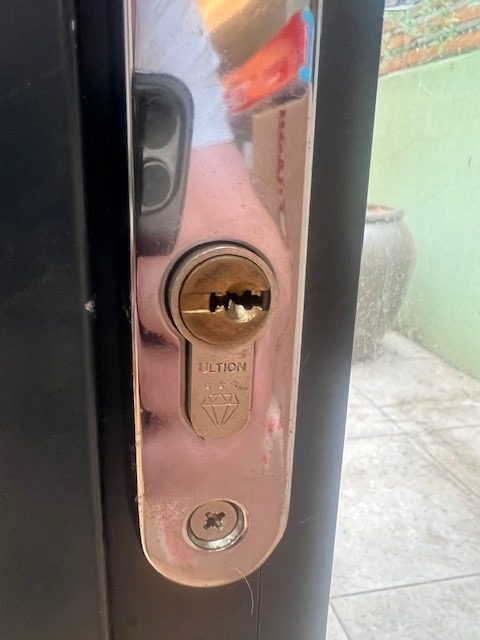
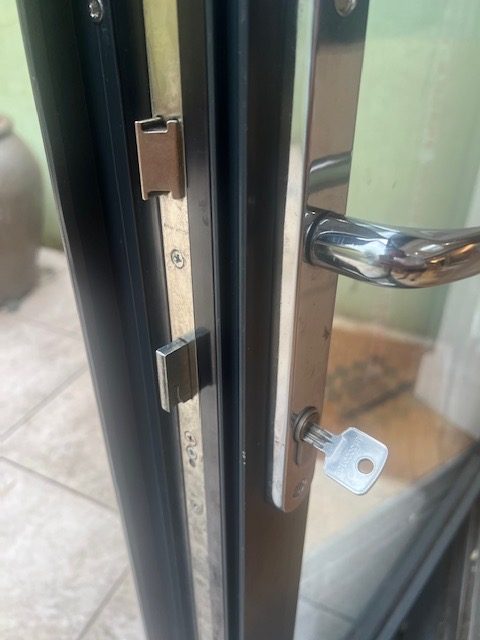
Most uPVC doors and composite doors in London, and many newer timber ones, use a euro cylinder lock. The euro cylinder is the part your key goes into. Turning the key moves a cam in the middle of the cylinder, and that cam drives the multi-point lock along the edge of the door.
The weakness is the design itself. A standard euro cylinder has a thin section in the middle, where the fixing screw passes through. That’s the part burglars attack, and it’s why snapping is such a common method.
Lock Snapping: How It Works and Why It Matters in Winter
Lock snapping is a type of attack in which the cylinder is broken at its weak middle section. Once the cylinder snaps, the lock can be opened from outside in seconds, even on a door with several locking points. It needs only basic tools, and criminals who use it rely on most homes still having standard locks. That’s why it’s one of the most common methods of breaking in through uPVC doors across the country.
We won’t explain the method in detail, but the signs are easy to spot afterwards: a cylinder broken off flush with the handle, or missing altogether. If you ever find that, call the police and a locksmith straight away.
Lock snapping is more likely to succeed when:
- door handles are weak and offer no protection to the cylinder
- the cylinder is a basic, unrated model, often the one fitted when the door was new
- the cylinder sticks out more than a few millimetres past the handle, giving something to grip
Other Attacks on a Euro Cylinder
Bump attacks. Lock bumping uses a specially cut “bump key” to open a basic pin cylinder without damage. Good cylinders include anti-bump pins designed to prevent this.
Picking and drilling. Cheaper cylinders offer little resistance. Better ones add anti-pick and anti-drill protection.
With a basic euro cylinder, it’s often lock snapping first, bumping second. A rated cylinder protects against all of these.
Anti Snap Lock Cylinders: What to Look For
Anti-snap lock cylinders, often sold simply as anti-snap locks, are designed so that, if someone attacks the cylinder, only a sacrificial front section breaks off. The part that operates the lock stays inside the door, still locked. Many also include anti-bump, anti-pick and anti-drill protection, so they protect against more than snapping alone. For example, a Diamond-rated cylinder is tested against snapping, bumping, picking and drilling.
Before you purchase or fit anti-snap lock cylinders, look for these markings on the face of the cylinder:
- TS007 3-star: the Kitemark standard for cylinders. A 3-star cylinder is the level most insurers and the police recommend.
- SS312 Diamond: Sold Secure’s highest rating for cylinders, tested against snapping, bumping, picking and drilling.
A 1-star cylinder can achieve the same 3-star rating when paired with 2-star security handles. In practice, a 3-star cylinder is the simpler upgrade.
Not every cylinder sold as “anti-snap” carries either standard, so check for the markings before you buy. If there’s no marking, treat it as a standard euro cylinder.
Size and Fitting Matter as Much as the Brand
A good cylinder fitted badly is still at risk, so ensure it’s the right size. The cylinder should sit almost flush with the handle on the outside, with no more than a few millimetres showing. To measure, go from the centre fixing screw to each end. Getting the measure right is what makes the cylinder sit flush and resist snapping. However, it’s easy to buy the wrong size online, and a cylinder that sticks out undoes much of the benefit. If you’re unsure, a locksmith can measure, supply and install it correctly in one visit, and you can purchase the cylinder at the same time.
High Security Lock Options We Fit
The best high security lock for you depends on your door, but these are the cylinders we’re asked about most:
- Ultion: rated TS007 3-star and SS312 Diamond, with a lock-hunter feature designed to keep the door locked even if the front of the cylinder is attacked.
- Mul-T-Lock: many of its cylinders carry 3-star or Diamond ratings, with strong key control.
- Avocet ABS: a well-known anti-snap cylinder, also rated to 3-star and Diamond levels.
All three are a big step up from the cylinder most doors came with. The cost of a good cylinder is small compared with the cost of a break-in, and upgrading your locks usually takes well under an hour. Upgrading the cylinder is the single most effective security measure for most uPVC doors. For a timber front door, the equivalent high security lock is a BS3621 mortice deadlock. Our Banham vs Ingersoll vs Mul-T-Lock comparison covers those options.
What Burglars Look For at Your Door
From what we see after a burglary, burglars look for a few things before choosing a home:
- old, unrated locks that are open to snapping, especially a cylinder that sticks out past the handle
- a front door where only the latch is locked
- locks they can reach through a letterbox or glass panel
- back doors and patio doors with weak locks, out of sight of neighbours
If you can find any of these on your own property, that’s where to start. Most can be fixed the same day.
Other Ways Doors Fail After Dark
Doors closed but never locked. On a multi-point door, closing it isn’t locking it. You need to lift the handle and turn the key. Met officers make the same point every autumn: the front door is still the number one point of entry. If your handle won’t lift or the key won’t turn, that’s a fault to fix now. See our composite door lock repair page.
Night latches on their own. A basic latch locks automatically, which is convenient, but it can often be slipped. If it’s your only lock, add a deadlock or upgrade to a deadlocking latch. See our night latch installation page.
Keys and letterboxes. Keys left on a hall table can be fished through the letterbox, and a thumbturn near a letterbox can sometimes be reached from outside. Leave nothing on the hall table, keep every key away from the door, and fit a letterbox guard to prevent fishing.
Patio doors lifted off their tracks. Older sliding doors at the back of houses, out of sight, can sometimes be lifted out without breaking anything. An anti-lift device and a key-operated lock prevent this. See our patio door lock repair page.
The London Weak Spots Generic Guides Don’t Mention
Basement flats and lightwells. Below street level and out of sight, often with older doors and windows.
Shared street doors. In converted houses and mansion blocks, the communal door is often held open for strangers, so your own flat door needs to be just as secure as a house front door.
Sash windows. Often secured with nothing more than the original catch. Key-operated sash stops protect period windows and let you leave the window slightly open for air whilst stopping it opening further. See our window lock installation page.
Christmas and holiday absences. Central London has many homes left empty over Christmas, with presents and jewellery inside. If you’ll be away, ask trusted neighbours to keep an eye out, and remember that your locks are doing all the work while you’re gone.
The 10-Minute Check for Sunday 25 October
Do this after dark on 25 October. Start on the pavement and look at your home the way a stranger would.
Your 10-minute door and window check
If you answered “no” or “not sure” to any of points 4 to 8, those are the jobs to get done before November. Call us on 07884 675 945 and we’ll sort them out.
Simple Measures That Support Your Locks
Strong locks are your main protection, but these simple security tips help ensure burglars never test them:
- Use a timer on lamps and a radio so your home looks lived in, and adjust it as sunset gets earlier.
- Fit sensor lights at the side and back of the property.
- Keep valuables and jewellery where thieves can’t spot them from the street.
- Leave a light on in a room you’d normally use, not just the hallway.
- Join or start a neighbourhood watch. Neighbours who know each other notice when something is wrong.
- Don’t post holiday plans online until you’re back.
Your Dark-Season Calendar
Key dates from late October to December
| Date | Why it matters | What to do |
|---|---|---|
| Sunday 25 October | British Summer Time ends; dark by 4.49pm | Do the 10-minute check and reset your timers |
| Saturday 31 October | Halloween: lots of strangers at the door | Keep the door locked between visitors; don’t leave keys near it |
| Thursday 5 November | Bonfire Night: the worst date of the year for burglary claims | Lock up before you go out, and leave lights and a radio on |
| November | The busiest month for burglaries | Get any lock faults or upgrades fixed now |
| Mid-December | Sunset before 4pm | Check that timers come on earlier |
| Late December | Homes empty, presents visible | Keep gifts out of sight; double-check locks before travelling |
Want it sorted before November? Call us on 07884 675 945 and we’ll check your locks and fix any faults the same day.
If You Become a Victim of a Break-In
- Don’t go inside if you think someone may still be there. Call 999.
- Report the crime and get a crime reference number. Insurers almost always ask for it first.
- Photograph the damage before anything is repaired, and don’t move any tools or items left behind.
- Secure the property the same day. A snapped cylinder or forced door leaves you exposed overnight, and we can support you with emergency repairs. See our burglary repair service.
- Change the locks if keys may have been taken. See changing locks after a robbery.
- Keep every receipt for your claim.
Burglary affects more than property. Many people feel unsettled at home for weeks afterwards, so don’t hesitate to ask for support and to speak to someone about it. Victim Support offers free help across the UK, and you can find details on its website.
FAQ
Is lock snapping common in London?
Yes. Lock snapping remains one of the most common ways burglars get through uPVC doors, because so many homes still have standard locks. Anti-snap locks are the best way to prevent it.
Can burglars still get in with anti-snap locks?
No lock is impossible to defeat, but rated anti-snap locks make snapping far harder and slower, and most burglars move on to an easier home. That’s the point: make your property harder than the one next door.
How long does it take to change to anti-snap locks?
Usually well under an hour per door, including measuring and fitting.
Who should I ask for advice on my locks?
A locksmith who knows the security standards. We’ll check every door and give you honest advice on which locks need upgrading and which don’t.
When do the clocks go back in 2026?
Sunday 25 October, at 2am. London sunset that day is 4.49pm.
Do burglaries really go up in winter?
Yes. Police and insurers both record a rise through autumn and winter, with Bonfire Night the worst single date for claims.
What are anti-snap lock cylinders?
Cylinders designed so only a sacrificial front section breaks if attacked, keeping the door locked. Look for TS007 3-star or SS312 Diamond markings.
How do I know if my euro cylinder is snap-resistant?
You can find the marking on the face of the cylinder: look for the Kitemark with three stars or the Sold Secure Diamond logo. No marking usually means a standard cylinder.
What’s the most useful security upgrade before winter?
For most uPVC doors and composite doors, a 3-star or Diamond-rated euro cylinder, fitted at the right size. For timber front doors, a BS3621 deadlock if you only have a night latch.
Get Your Home Checked Before November
The Kensington Locksmith London house security assessment checks every external door and accessible window against the standards insurers use, including BS3621 and TS007, whatever the complexity of your property. Most visits take under an hour, and you get a written summary of what we found and what any upgrades would cost. If a cylinder or lock needs replacing, we can usually do it the same day, so your family can feel secure through the darkness of winter. Whoever lives in the home, from students to older relatives, good locks protect everyone inside.
Speak to us 24/7 for advice on locks across Kensington, Notting Hill, Chelsea, Knightsbridge, Hammersmith, Fulham and the rest of West and South West London, or visit our security assessment page to book.
Call 07884 675 945